01
Basic · Undergraduate · Complete
Precalculus
Foundations and alignment for what comes next
📚 2 books: 1 main + 1 complementary
The goal is to move through this phase as efficiently as possible, without skipping steps. Most people who get stuck in Calculus get stuck earlier: in algebraic manipulation, elementary functions, and trigonometry. Use Iezzi as a reference, identifying specific gaps and going straight to them.
How to StudyDo not read Iezzi from cover to cover. Do an honest audit of what you do not fully command and work specifically on those topics. The Elon is optional but recommended for those who want a smoother transition into the language of formal mathematics.
Books
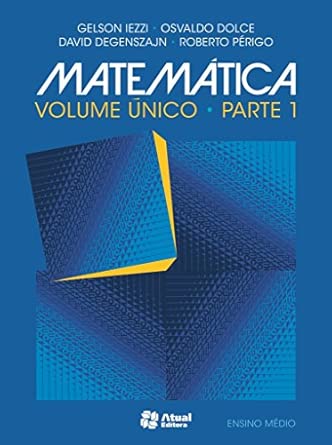
Matemática — Volume ÚnicoMain
Gelson Iezzi et al.
A complete Brazilian high-school mathematics reference, widely used for university entrance preparation. Use it as a reference and leveling tool, not as linear reading.
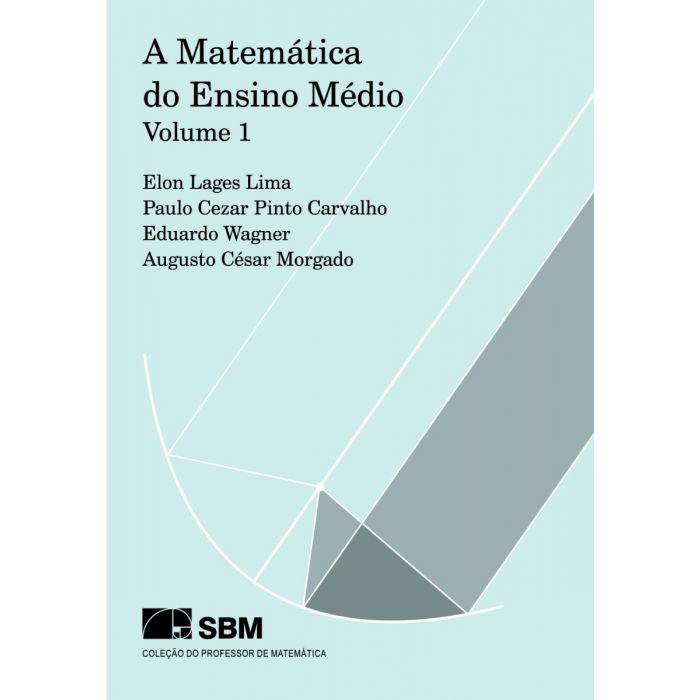
A Matemática do Ensino Médio (3 vols.)Complementary
Elon Lages Lima
Originally aimed at teacher development, it covers the same material as Iezzi with genuine mathematical rigor. Do not dwell on it for too long. Use it as a bridge toward formal mathematical thinking.
What to Absorb
- Algebraic operations and factoring
- Functions and their graphs
- Exponential, logarithmic, and trigonometric functions
- Equations and inequalities
- Basic analytic geometry
Minimum to Move On:the topics above, using Iezzi as a guide for specific gaps
Ready to Move On When:
- You manipulate algebraic expressions and functions without hesitation
- You know the behavior of elementary functions and their graphs
- You solve equations and inequalities without needing to look up formulas
02
Basic · Undergraduate · Complete
Logic and Proofs
Learning to think and write mathematically
📚 2 books: 1 main + 1 complementary
One of the most important phases in the entire roadmap. Mathematics is not calculus. It is logical rigor and proof. Here you learn the language: quantifiers, implication, negation, induction, contradiction, contraposition. Without this, there is simply no moving forward.
How to StudyCordeiro should be read with pencil and paper. Try to write every proof before looking at the solution, even if you get stuck for hours. That struggle is part of the formation. Velleman is complementary: work through it if you want a truly solid foundation for the phases ahead.
Books
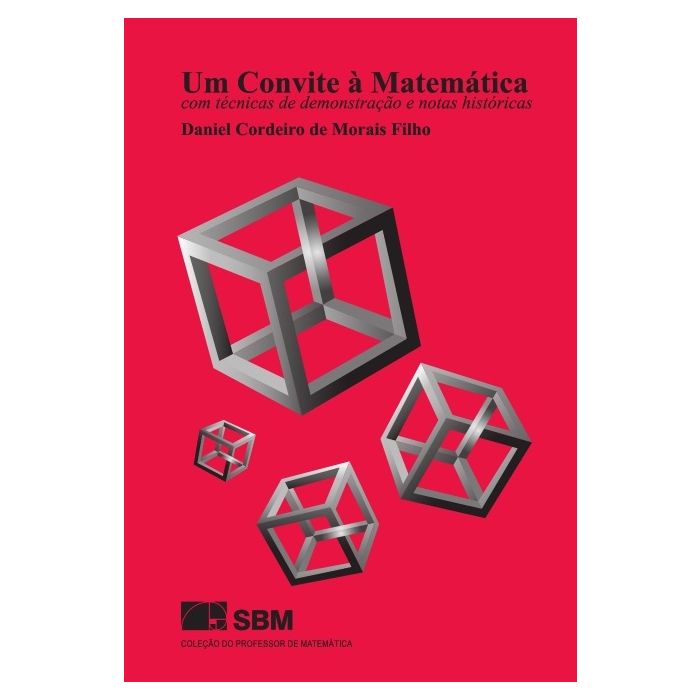
Um Convite à MatemáticaMain
Marcelo Cordeiro e Daniel Tyszler
The central book of this phase. Teaches the language of mathematics: logic, quantifiers, and the main proof techniques. Accessible, well written, and directly useful for what comes next.
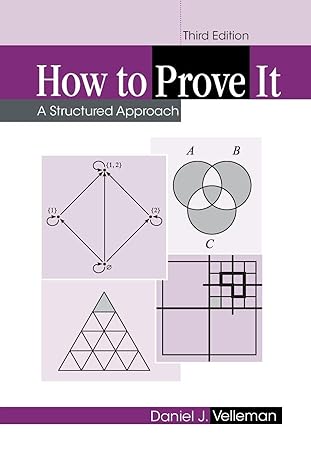
How to Prove ItComplementary
Daniel J. Velleman
A more formal and systematic approach. Work through it if you want a truly solid foundation, especially if you intend to go beyond the Basic Track.
What to Absorb
- Propositional logic and quantifiers
- Implication, negation, contraposition
- Proof by induction
- Proof by contradiction
- Sets, functions, relations
Minimum to Move On:the topics above mastered: you can write complete proofs
Ready to Move On When:
- You understand what it means to prove something
- You can write a proof by induction, contradiction, or contraposition without consulting a model
- You know the difference between ∀ and ∃ and how to negate each
03
Basic · Undergraduate · Complete
Elementary Number Theory
Divisibility, congruences, and first arithmetic arguments
📚 2 books: 1 main + 1 complementary
Phase 2 (Logic and Proofs)
An elementary number theory phase is excellent for practicing proofs in a concrete setting. Divisibility, congruences, primes, the Euclidean algorithm, and modular arithmetic offer accessible yet mathematically rich problems. This phase prepares the reader for abstract algebra, field theory, Galois theory, and the more advanced number theory of the undergraduate track.
How to StudyUse Burton as the main text. This phase is less about accumulating sophisticated results and more about learning to prove: working with divisibility, congruences, induction, contradiction, and examples. Jones & Jones enters as a complement to reinforce exercises and offer another organization of the same material. There is no need to study advanced number theory topics at this stage.
Books
Elementary Number TheoryMain
David M. Burton
The main text for a first encounter with number theory. Straightforward, accessible, and well suited to self-study, with many exercises. The focus should be divisibility, the Euclidean algorithm, congruences, the Chinese Remainder Theorem, elementary arithmetic functions, and first results on primes.
Elementary Number TheoryComplementary
Gareth A. Jones and J. Mary Jones
A clear and well-organized complement, useful for seeing the same elementary arithmetic from a different angle. Works especially well as support for exercises, examples, and solidifying the language of congruences.
What to Absorb
- Divisibility, the Euclidean algorithm, and greatest common divisor
- Prime numbers and unique factorization
- Congruences and modular arithmetic
- Chinese Remainder Theorem in simple examples
- Fermat's little theorem and Euler's theorem
- Elementary arithmetic functions at an introductory level
- First simple Diophantine problems
Minimum to Move On:mastery of divisibility, congruences, the Euclidean algorithm, unique factorization, and the first arithmetic theorems, solving simple exercises without relying on ready-made solutions
Ready to Move On When:
- You can prove basic results on divisibility and greatest common divisor
- You solve linear congruences and simple modular arithmetic problems
- You understand and apply the Chinese Remainder Theorem in concrete examples
- You can use Fermat/Euler in elementary problems
- You are more comfortable writing short, precise proofs
04
Basic · Undergraduate · Complete
Calculus I
Limits, derivatives, integrals, and series
📚 2 books: 1 main + 1 complementary
Phases 1 and 2 (Precalculus; Logic and Proofs)
The heart of Calculus is the limit. This phase does not use books like Stewart, which is too elementary for this roadmap, or Guidorizzi, which is less motivating for self-study. The chosen books introduce the definition of sequence convergence, and understanding this concept greatly aids the understanding of limits. Caminha is the main text; Táboas enters as a complement to reinforce and extend.
How to StudyFor every theorem, try to understand why each hypothesis is necessary before reading the proof. Use Táboas on topics where Caminha is more concise. The two complement each other well. Do not move on without understanding sequences and series: they reappear throughout Real Analysis.
Books
Fundamentos de CálculoMain
Antônio Caminha
Rigorous, modern, and with worked exercises. Covers limits, continuity, derivatives, integrals, and sequences/series with genuine mathematical honesty. One of the best entry points into serious calculus in Portuguese.
Cálculo em Uma Variável RealComplementary
Plácido Táboas (ICMC-USP)
More comprehensive on several topics, with solid coverage of sequences and series. Use in parallel: when you get stuck on a topic in Caminha, see how Táboas approaches it.
What to Absorb
- Definition of sequence convergence
- Definition of limit and continuity
- Derivatives and differentiation rules
- Mean Value Theorem and applications
- Riemann integral and Fundamental Theorem of Calculus
- Sequences and series: convergence and convergence tests
Minimum to Move On:the topics above, using Caminha as the main text
Ready to Move On When:
- You can prove limits from the definition
- You understand why a continuous function on a closed interval attains its maximum and minimum
- You can state and apply the three main theorems of Calculus I
05
Basic · Undergraduate · Complete
Elementary Linear Algebra
Can be studied in parallel with Calculus I
📚 2 books: 1 main + 1 complementary
Phases 1 and 2 (Precalculus; Logic and Proofs)
Independent of Calculus, this phase can run in parallel. This first encounter serves as preparation for the Linear Algebra of the Undergraduate Track, where the subject is treated with the depth it deserves.
How to StudyFor every new concept, ask what it means geometrically. Geometric intuition is as important as formalism at this stage.
Books
Álgebra Linear no ℝⁿ e Geometria Analítica VetorialMain
Plácido Andrade (SBM)
An excellent first rigorous treatment. Covers vector spaces, linear transformations, and analytic vector geometry in an integrated way, without sacrificing mathematical precision. Published by SBM, well calibrated for those just starting out.
Geometria Analítica e Álgebra LinearComplementary
Elon Lages Lima
A more geometric perspective. Use one or the other and prioritize the main text. Together they may be redundant at this level.
What to Absorb
- Linear systems and row reduction
- Vector spaces, subspaces, basis, and dimension
- Linear transformations and matrices
- Determinants
- Eigenvalues, eigenvectors, and diagonalization
- Inner product and orthogonality
Minimum to Move On:the topics above, using Plácido Andrade as the main text
Ready to Move On When:
- You understand what a vector space is and can verify the axioms
- You can work with basis, dimension, and linear transformations
- You compute eigenvalues and understand what they mean geometrically
06
Basic · Undergraduate · Complete
Multivariable Calculus
Functions of ℝⁿ and the classical integral theorems
📚 3 books: 2 main + 1 complementary
Phase 4 (Calculus I)
Extends calculus to functions of several variables, culminating in the theorems of Green, Stokes, and Gauss, which will be unified and generalized in Multivariable Analysis further ahead.
How to StudyAlternate between Lang and Diomara, as they complement each other. Marsden & Tromba enters as a targeted reference when you want more depth. Do not skimp on drawing: visualizing vector fields and surfaces is half the learning, and it genuinely makes a difference in problem solving.
Books
Calculus of Several VariablesMain
Serge Lang
Direct, rigorous, and no-nonsense. Covers partial derivatives, gradient, Lagrange multipliers, multiple integrals, and the classical theorems with precision and elegance.
Cálculo Diferencial e Integral de Funções de Várias VariáveisMain
Diomara Pinto e Regina Noguchi
Complements Lang with more examples and exercises. Alternate between the two: what one treats briefly, the other expands.
Vector CalculusComplementary
Marsden e Tromba
Use one or the other and prioritize the first two. Useful as a third targeted perspective, especially on the integral theorems.
What to Absorb
- Partial derivatives, gradient, and Jacobian
- Chain rule in several variables
- Local extrema and Lagrange multipliers
- Multiple integrals and change of variables
- Theorems of Green, Stokes, and Gauss
- Vector fields and conservative fields
Minimum to Move On:the topics above, with conceptual mastery of total differentiability vs. partial derivatives, interpretation of the Jacobian as a linear map, and understanding of the hypotheses of Green's, Gauss's, and Stokes's theorems
Ready to Move On When:
- You clearly distinguish partial derivatives, directional derivatives, and total differentiability — with examples and counterexamples
- You interpret the Jacobian as a linear map and local approximation, not merely a computational matrix
- You know when and why to apply Green, Gauss, or Stokes, and understand their hypotheses
07
Basic · Undergraduate · Complete
Real Analysis on the Line
Exit point of the Basic Track
📚 4 books: 3 main + 1 advanced
Phase 4 (Calculus I)
This is the most transformative phase in the roadmap. Real Analysis on the Line gives structure and rigor to everything done in Calculus. Do not rush here. It is the culmination of all prior study. Anyone who completes this phase well — and then decides to stop — will have a mathematical foundation far above average.
How to StudyChoose one of the three main books and follow it seriously. Zahn and Abbott are the best entry points for self-study readers. Elon is the definitive Portuguese-language classic: use it as a complement, or as your main text if you prefer concision and elegance. Baby Rudin should only be attempted if the other three already feel easy: it is more demanding, introduces metric spaces early, and makes no concessions to rigor. If you read it, go through chapter 8.
Books
Análise RealMain
Maurício Zahn
An excellent entry point into Real Analysis. More accessible than Elon at several points, without sacrificing rigor. Highly suitable for self-study.
Curso de Análise — Vol. 1Main
Elon Lages Lima
The definitive Portuguese-language classic on Real Analysis. Covers the real numbers, topology of the line, limits, continuity, derivatives, and the Riemann integral with elegance and clarity that are hard to surpass.
Understanding AnalysisMain
Stephen Abbott
One of the best introductory analysis books in English. Clear, motivating, and well organized, with an excellent balance between intuition and rigor. Especially strong for self-study readers.
Principles of Mathematical AnalysisAdvanced
Walter Rudin
The famous and feared Baby Rudin. Dense, uncompromising, and precise. The most celebrated analysis textbook in the world. Attempt it only if the other three already feel easy. If you read it, go through chapter 8.
What to Absorb
- Construction of the real numbers and completeness
- Topology of the line: open sets, closed sets, compact sets
- ε-δ definition of limit and continuity
- Intermediate Value Theorem and Heine-Cantor theorem
- Differentiability and Mean Value Theorem
- Riemann integral: definition and properties
- Pointwise and uniform convergence of sequences of functions
Minimum to Move On:the topics above with genuine rigor: computing is not enough — you must be able to prove
Exit point of the Basic Track. Ready when:
- You can prove the Intermediate Value Theorem and Bolzano-Weierstrass from the definitions
- You understand the completeness of the reals and why it matters
- You distinguish pointwise and uniform convergence of sequences of functions
Upon completing the Basic Track
- Congratulations: you will have built a mathematical foundation well above average in mathematical language, elementary arithmetic, calculus, and introductory analysis.
- This is a legitimate endpoint for serious enthusiasts, teachers, programmers, and curious readers.
- If you want to continue into the Undergraduate Track, the next step is to consolidate Linear Algebra, Abstract Algebra, Topology, and the first more formal mathematical structures.
↑ Back to phase map
08
Undergraduate · Complete
Linear Algebra
One of the most important subjects in the entire roadmap
📚 3 books: 1 main + 2 complementary
Phase 5 (Elementary Linear Algebra)
The first contact in Phase 5 served as preparation. Here the subject is treated with the depth it deserves. Linear Algebra is the foundation of virtually all of mathematics: without it, there is no advancing in Analysis, Geometry, or Topology. Do not neglect it.
How to StudyThe three books complement each other. Coelho is the main text: rigorous, well structured, and clearly written. Hoffman & Kunze is the absolute classic that every mathematician consults; like Baby Rudin in Analysis, it is probably the most celebrated linear algebra textbook in the world. Axler is an elegant alternative that avoids determinants at the outset. Serious reading of at least two of the three is the ideal.
Books
Um Curso de Álgebra LinearMain
Flávio Ulhoa Coelho e Mary Lilian Lourenço
The best Portuguese-language option at this level. Rigorous and well written, covering vector spaces, linear transformations, eigenvalues, canonical forms, and inner products with the depth the phase demands.
Linear Algebra Done RightComplementaryFree ↗
Sheldon Axler
Determinant-free approach that keeps full focus on linear transformations and their intrinsic structure. Builds excellent intuition about operators and is a great source of problems. Freely available on the author's website.
Linear AlgebraReference
Hoffman e Kunze
The classic. Rigorous and complete: covers spaces over general fields, Jordan form, modules, and multilinear forms. Demanding, but readers come out stronger for it.
What to Absorb
- Vector spaces over general fields
- Linear operators and their structure
- Minimal polynomial and characteristic polynomial
- Jordan canonical form
- Bilinear forms and the spectral theorem
- Inner product spaces over ℂ
Minimum to Move On:the topics above via Coelho. Hoffman & Kunze is enrichment, not a strict prerequisite
Ready to Move On When:
- You work with vector spaces over general fields with confidence
- You understand Jordan canonical form and can construct it
- You command bilinear forms and the spectral theorem
09
Undergraduate · Complete
Algebra I
Groups, rings, and fields
📚 2 books
Phase 5 (Elementary Linear Algebra)
First serious encounter with the fundamental algebraic structures. The target is chapters 0–19 of Gallian or 1–26 of Pinter. The chance of developing a genuine interest in algebra after these topics is very high.
How to StudyChoose one of the two and consult the corresponding section of the other. Always work with concrete examples: symmetry groups, integers modulo n, polynomials over ℚ. Every abstract theorem must be verified in two or three examples before it can be considered understood.
Books
Contemporary Abstract AlgebraMain
Joseph Gallian
Accessible, with many examples and historical context. Makes the subject feel natural and motivated, not merely abstract and axiomatic.
A Book of Abstract AlgebraMain
Charles C. Pinter
Written with exceptional clarity and excellent exercises. Consult the section corresponding to whatever you are studying in Gallian.
What to Absorb
- Groups, subgroups, cyclic groups
- Homomorphisms and isomorphism theorems
- Quotient groups and Lagrange's theorem
- Rings, ideals, and quotient rings
- Integral domains and fields
- Polynomials and field extensions (introduction)
Minimum to Move On:the topics above. Chapters 0–19 of Gallian or 1–26 of Pinter cover the essentials
Ready to Move On When:
- You can prove Lagrange's theorem and understand its consequences
- You know what a homomorphism is and can prove the First Isomorphism Theorem
- You understand quotient groups and quotient rings
10
Undergraduate · Complete
Number Theory
Can be studied in parallel with Algebra I
📚 3 books: 2 main + 1 complementary
Phase 3 (Elementary Number Theory)
This phase returns to number theory at the undergraduate level, now with more mathematical maturity. The goal is to deepen congruences, arithmetic functions, sums, quadratic reciprocity, first analytic methods, and connections with algebra. Apostol serves as the more accessible, analytic main entry; Ireland & Rosen is the robust main path for those who want to go deeper in the algebraic direction; and Um Passeio com Primos broadens mathematical culture with challenging problems and special topics.
How to StudyBegin with Apostol, without any obligation to read it in full. The core of the phase lies in arithmetic functions, congruences, sums, products, elementary estimates, and first analytic methods. Use Ireland & Rosen as a robust main route if you develop a serious interest in number theory, especially in the algebraic direction: finite fields, reciprocity, Gauss and Jacobi sums, zeta and L-functions, and algebraic number theory. Um Passeio com Primos works as a challenging Brazilian complement, excellent for problems, seminars, and mathematical culture. This phase can be studied in parallel with Algebra I.
Books
Introduction to Analytic Number TheoryMain
Tom M. Apostol
Main text for the more accessible, analytic route. Despite the somewhat intimidating title, it is perfectly manageable with basic elementary number theory and some analysis. Serves as a natural bridge between elementary arithmetic, arithmetic functions, sums, products, Dirichlet series, and first analytic methods. No need to read it in full: use it as the axis for consolidating the analytic language of number theory.
A Classical Introduction to Modern Number TheoryMain
Kenneth Ireland e Michael Rosen
The robust main text for those who develop a genuine interest in number theory. More algebraic and directional, leading from elementary theory to finite fields, quadratic and higher reciprocity, Gauss and Jacobi sums, zeta and L-functions, algebraic number theory, cyclotomic fields, Diophantine equations, and elliptic curves. No need to read it entirely on a first pass: use it as an algebraic deepening route.
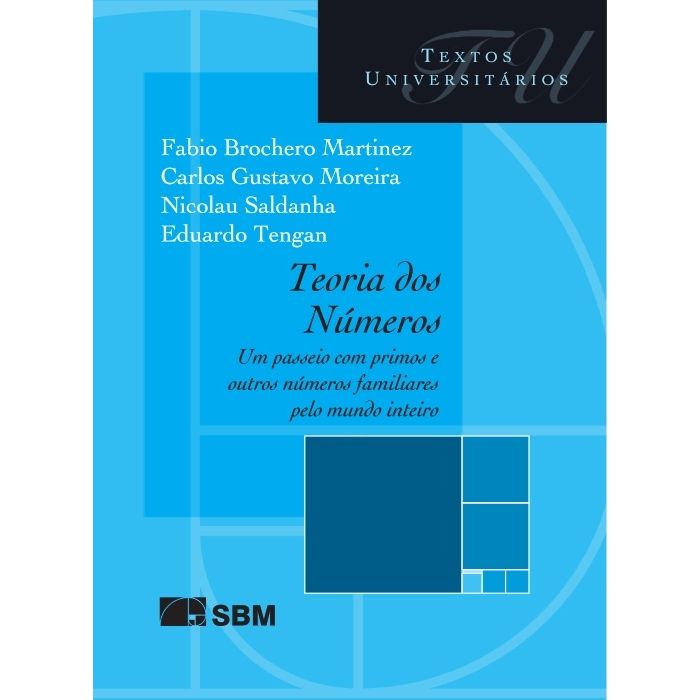
Um Passeio com Primos e Outros Números Familiares pelo Mundo InteiroComplementary
Carlos Gustavo Tamm de Araújo Moreira, Nicolau Corção Saldanha e Eduardo Tengan
A broad, challenging, and culturally rich Brazilian complement. The first part covers the traditional elementary number theory syllabus; the second opens up to independent topics such as primality, AKS, Lucas–Lehmer, algebraic integers, elliptic curves, and a bridge to the Prime Number Theorem. Excellent for harder problems, seminars, university olympiads, and connections with analysis, algebra, and geometry.
What to Absorb
- Arithmetic functions and operations such as Dirichlet convolution
- Congruences at a more mature level
- Arithmetic sums, products, and elementary estimates
- Quadratic reciprocity and Legendre/Jacobi symbols at an introductory level
- Primitive roots and the multiplicative structure modulo n, if the chosen text reaches that far
- First connections with rings, finite fields, and extensions
- Initial intuition about Dirichlet series, zeta functions, or the distribution of primes, without requiring advanced mastery
Minimum to Move On:understanding arithmetic functions, more advanced congruences, quadratic reciprocity at an introductory level, basic arithmetic sums, and the initial bridge between number theory, analysis, and abstract algebra
Ready to Move On When:
- You can work with arithmetic functions and Dirichlet convolution in basic examples
- You understand congruences in a more structural way and recognize the significance of quadratic reciprocity
- You can follow arguments involving sums, products, and elementary estimates
- You recognize the interaction between number theory, analysis, groups, rings, and finite fields
- You are prepared to encounter Galois theory, commutative algebra, algebraic number theory, and algebraic geometry with greater arithmetic maturity
11
Undergraduate · Complete
Multivariable Analysis
Rigorous formalization of multivariable calculus
📚 4 books: 2 main + 2 complementary
Phases 5, 6, and 7 (Elementary Linear Algebra; Multivariable Calculus; Real Analysis on the Line)
Here the derivative is a linear transformation. The central result is the General Stokes Theorem, which unifies Green, Gauss, and Stokes-Kelvin into a single statement. A direct prerequisite for Differential Geometry.
How to StudyCipolatti is a good option for those who want a more direct approach, but it does not cover differential forms or the General Stokes Theorem, opting instead for the Divergence Theorem (which can also be seen as a consequence of General Stokes). In that case, complement with Munkres on those topics. Those who want the complete approach from the start should use Munkres as the main text. Mikusinski & Taylor is self-contained and already includes a simplified introduction to the Lebesgue integral, anticipating concepts from later phases.
Books
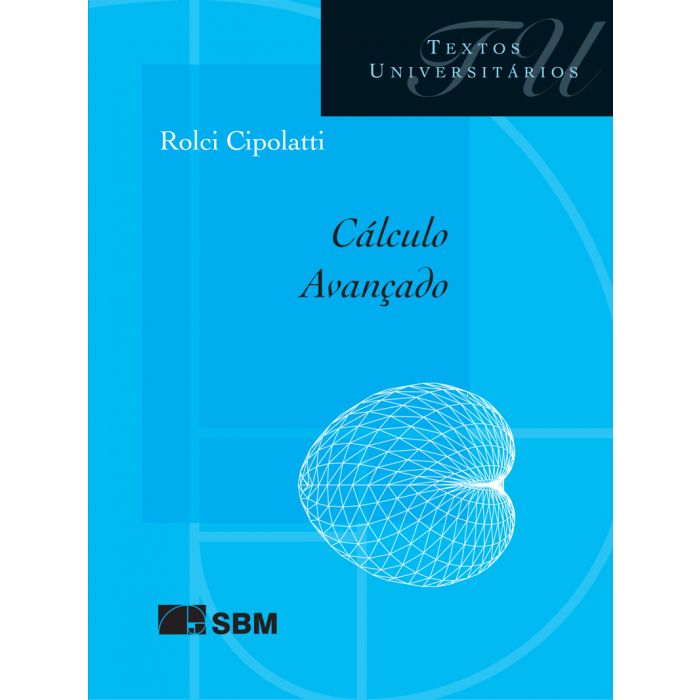
Cálculo AvançadoMain (direct option)
Rolci Cipolatti (SBM)
A national gem. Treats differentiability in normed spaces with clarity and good generality. Does not cover differential forms or the General Stokes Theorem: complement with Munkres on those topics.
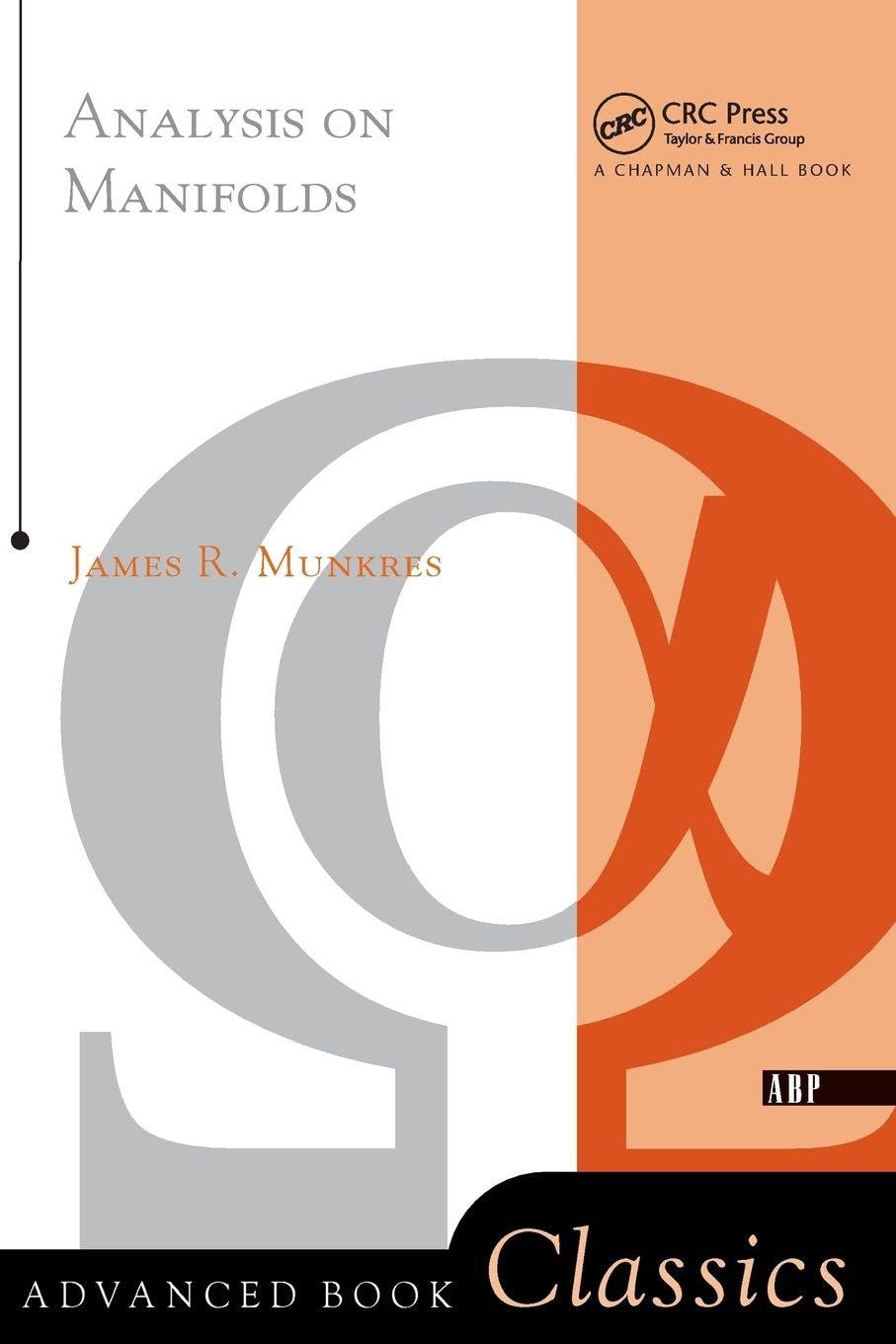
Analysis on ManifoldsMain (complete approach)
James R. Munkres
A classic in the area. Covers differentiability in ℝⁿ, the implicit function theorem, integration on manifolds, and the General Stokes Theorem with Munkres's characteristic clarity.
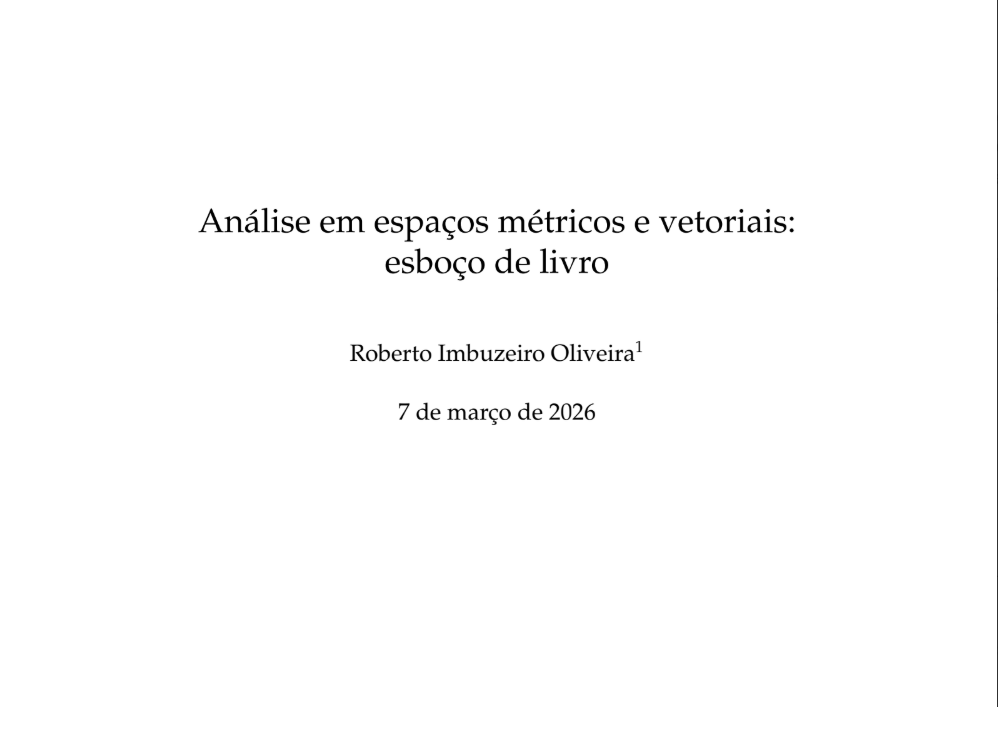
Análise no RⁿComplementary (free)Free ↗
Roberto I. Oliveira
Course notes in Portuguese for analysis in Rⁿ, with a rigorous treatment of calculus in normed spaces, close in spirit to Cipolatti. Serves as a natural complement to reinforce limits, continuity, differentiability, the Fréchet derivative, maps between normed spaces, the inverse and implicit function theorems, submanifolds, and multidimensional integration.
An Introduction to Multivariable AnalysisComplementary
Piotr Mikusiński e Michael D. Taylor
Self-contained and well calibrated for self-study. Already includes a simplified introduction to the Lebesgue integral, anticipating concepts from later phases.
What to Absorb
- The derivative as a linear transformation: the differential
- Implicit function theorem and inverse function theorem
- Manifolds in the Euclidean case
- Elementary differential forms
- Integration on manifolds and the General Stokes Theorem
Minimum to Move On:the topics above: Cipolatti plus the forms and Stokes chapters of Munkres, or Munkres complete
Ready to Move On When:
- You understand the derivative as a linear transformation
- You can state and apply the Implicit Function Theorem
- You understand the General Stokes Theorem as a unifying result
12
Undergraduate · Complete
Topology
Metric spaces and general topology
📚 3 books: 2 main + 1 reference
Phase 7 (Real Analysis on the Line)
The framework that unifies and generalizes the notions of neighborhood, continuity, and convergence that appeared in Real Analysis on the Line. A prerequisite for almost everything in the advanced phases.
How to StudyIdeally, start with Elon before Munkres, as the transition from metric spaces to general topological spaces is more natural that way — though it is not mandatory. Munkres is the most complete and well-written text for General Topology. Willard is a reference for consultation, not for linear reading.
Books
Espaços MétricosMain
Elon Lages Lima
A rigorous Portuguese-language text. Presents the metric space structure carefully: convergence, completeness, compactness, continuity. Makes the natural transition to general topology. Recommended reading before Munkres, but not mandatory.
TopologyMain
James R. Munkres
The world reference for General Topology. One of the finest mathematics books of the twentieth century. Every chapter is a model of how to present mathematics with clarity without sacrificing rigor. Do not rush through it.
General TopologyReference
Stephen Willard
More complete than Munkres, with more results and counterexamples. Use as a reference after Munkres.
What to Absorb
- Metric spaces: convergence, completeness, compactness
- Axiomatic definition of a topological space
- Bases, subspaces, and product topology
- Continuity, homeomorphisms
- Compactness and Tychonoff's theorem
- Connectedness and path-connectedness
- Separation axioms: Hausdorff, normal
Minimum to Move On:the topics above: Elon covers metric spaces; Munkres Part I covers general topology
Ready to Move On When:
- You work with the axiomatic definition of a topological space
- You understand compactness and why it matters
- You distinguish connectedness from path-connectedness
13
Undergraduate · Complete
Complex Variables
One of the most elegant areas of all mathematics
📚 4 books: 1 main + 2 complementary + 1 visual
Phases 6 and 7 (Multivariable Calculus; Real Analysis on the Line)
Functions differentiable over the complex numbers have surprisingly rigid properties: differentiable once means differentiable infinitely many times and analytic. Cauchy's theorem and residue theory have far greater reach than they first appear. Choose Soares as the main text and complement with Bak or Palka.
How to StudyThe Cauchy-Riemann conditions say the function preserves angles: it is a conformal map. Always try to visualize what a complex function does geometrically. Needham is the reference for this: read it in parallel to build visual intuition.
Books
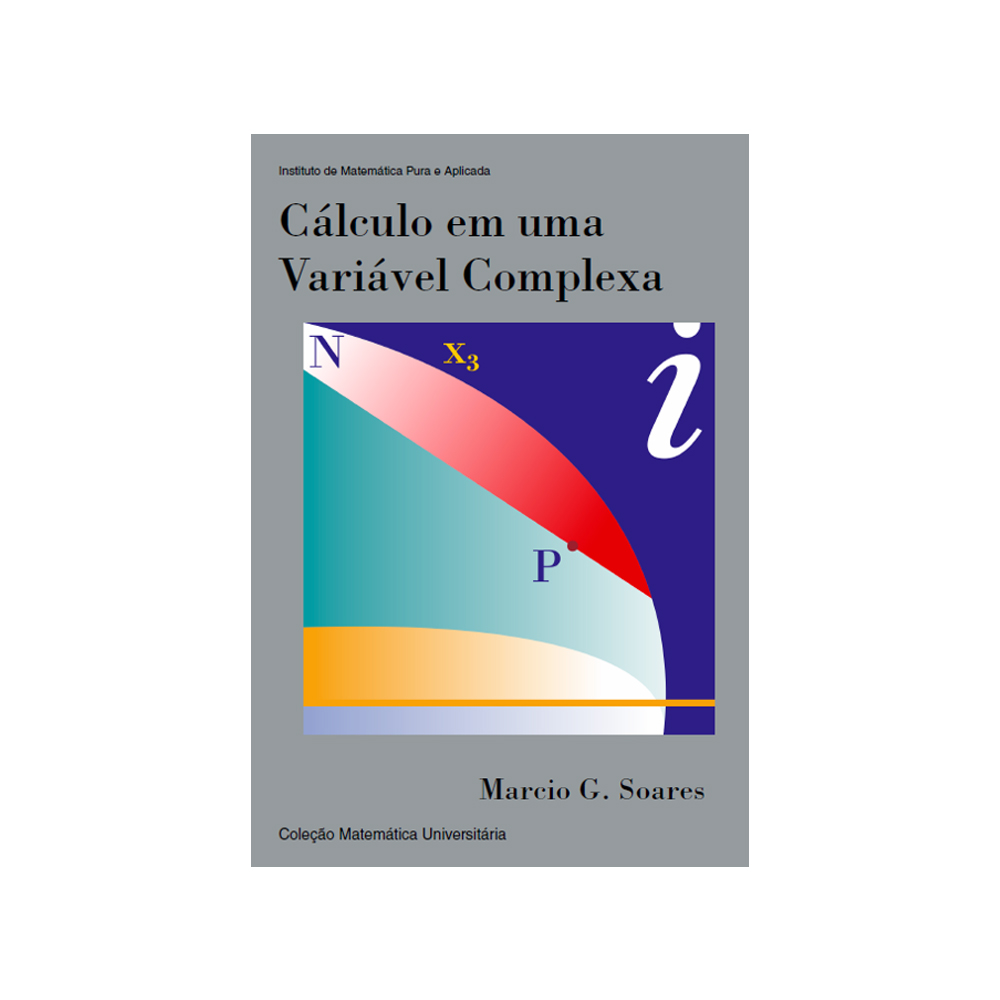
Cálculo em Uma Variável ComplexaMain
Márcio G. Soares
An excellent national entry point. Accessible and well motivated, covering Cauchy-Riemann, complex integration, Cauchy's theorem, and residues with clarity.
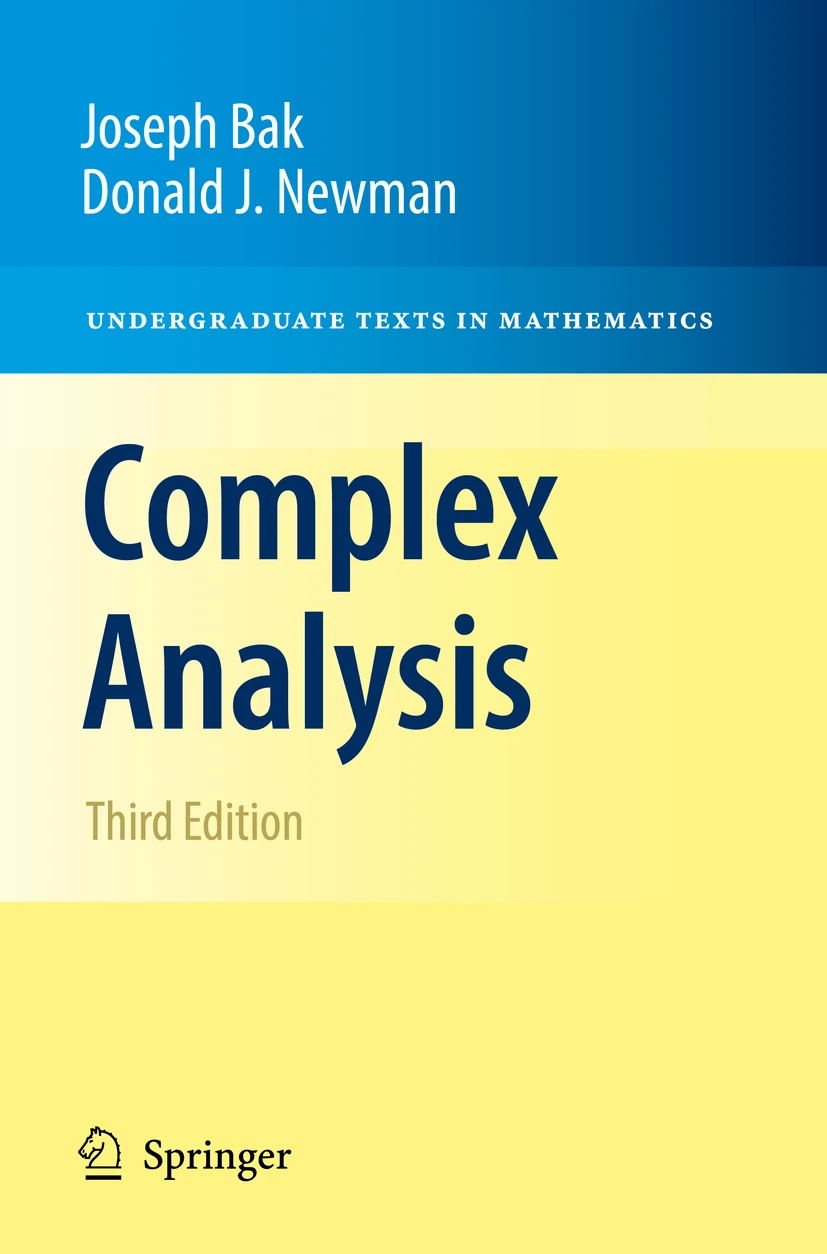
Complex AnalysisComplementary
Bak e Newman
Equivalent to Soares in level and coverage. Consult it when you want a second exposition of the same topics.
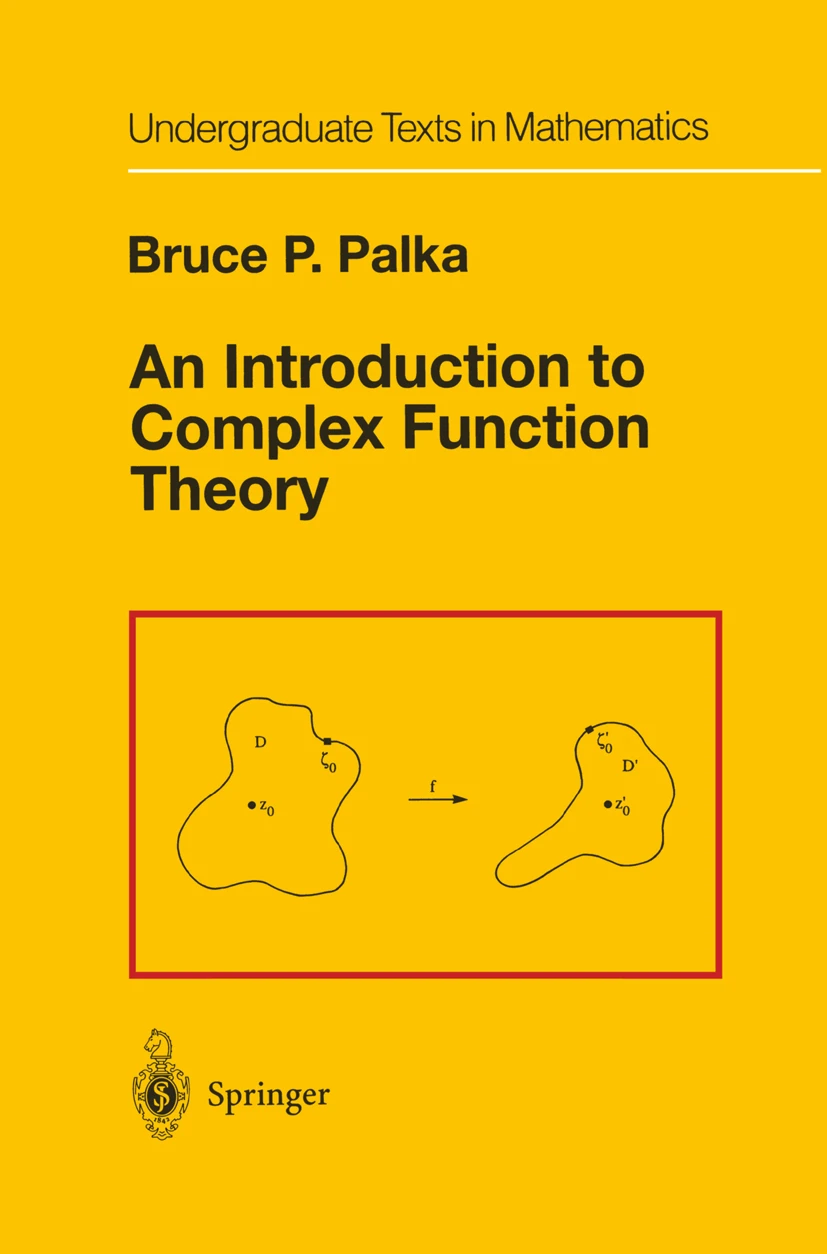
An Introduction to Complex Function TheoryComplementary
Bruce P. Palka
Well structured and detailed. Covers introductory complex analysis more extensively than Bak & Newman, making it a good option for those who want to deepen specific topics such as integration in the complex plane and Laurent series.
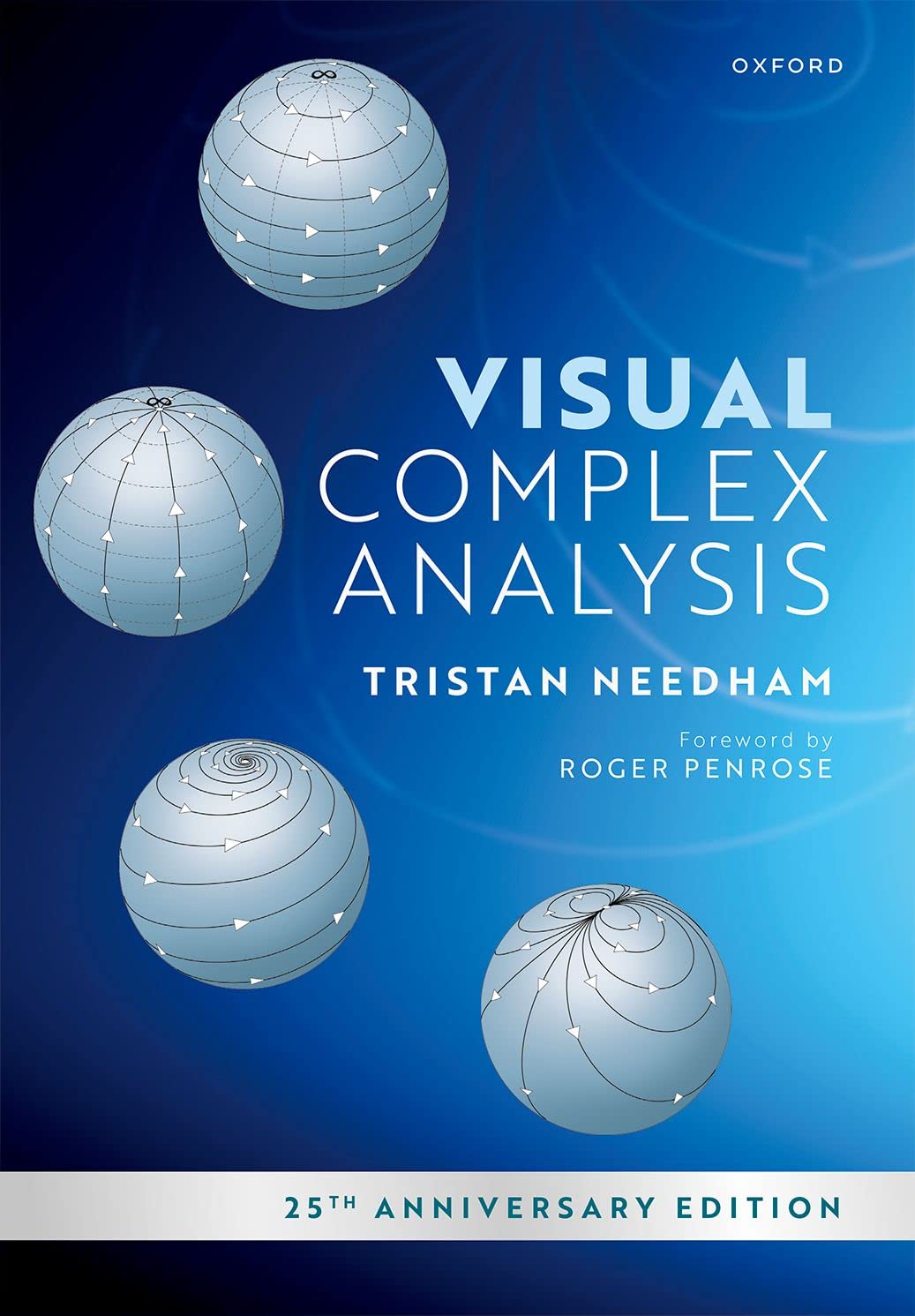
Visual Complex AnalysisVisual / Parallel
Tristan Needham
The reference for geometric intuition in Complex Analysis. Parallel reading — it does not replace the others.
What to Absorb
- Analytic functions and the Cauchy-Riemann conditions
- Line integrals in the complex plane
- Cauchy's theorem and integral formula
- Taylor and Laurent series
- Singularities and their classification
- Residue theorem and applications
Minimum to Move On:the topics above, using Soares as the central reference
Ready to Move On When:
- You understand the Cauchy-Riemann conditions and their geometric interpretation
- You apply Cauchy's theorem and compute integrals via the Residue Theorem
- You expand in Laurent series and classify singularities
14
Undergraduate · Complete
Geometry of Curves and Surfaces
Local geometry before manifolds
📚 4 books: 1 main + 2 complementary + 1 reference
Phases 5 and 6 (Elementary Linear Algebra; Multivariable Calculus)
First systematic contact with classical differential geometry. The goal is to study curves and surfaces in Euclidean space before entering the abstract language of manifolds. This phase builds geometric intuition for curvature, fundamental forms, geodesics, and constructions such as the Gauss map.
How to StudyUse Shifrin as the main path: it is shorter, more direct, and contains what is needed to work through the phase with good self-study support. Then use Pressley to consolidate intuition and reinforce exercises. O'Neill is friendly but larger, so it works better for selective deepening. Do Carmo is the classic reference: excellent, but harder for self-study on a first pass — ideal for consultation or a second reading.
Books
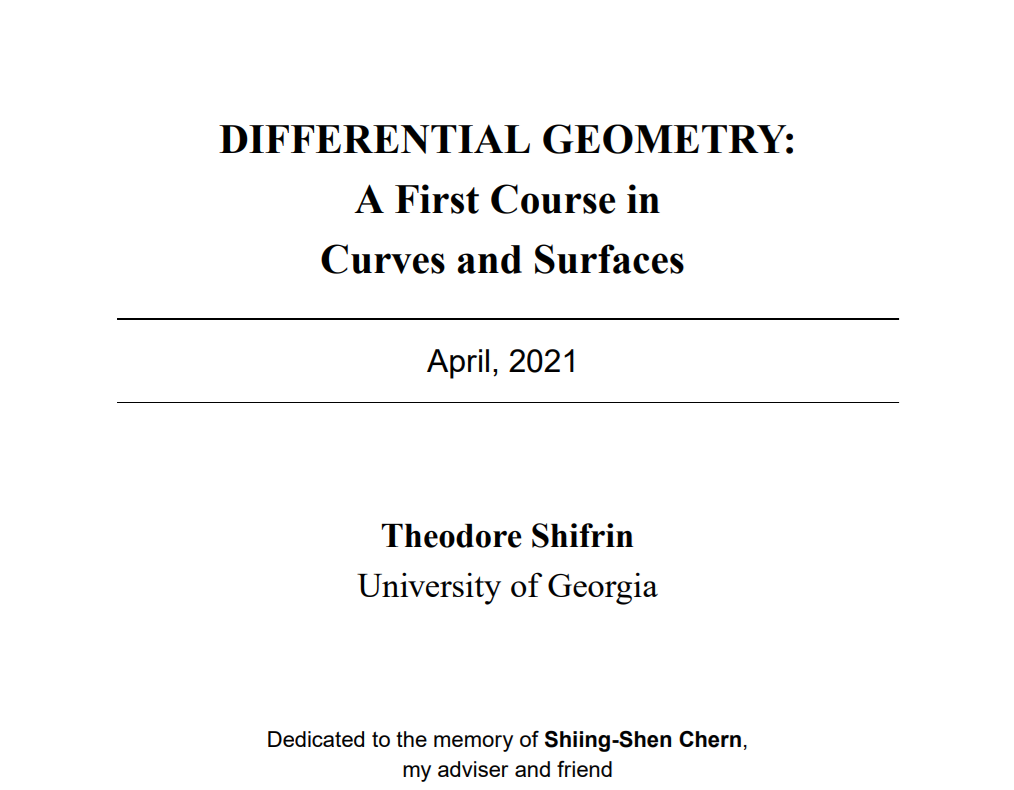
Differential Geometry: A First Course in Curves and SurfacesMain (free)Free ↗
Theodore Shifrin
The most natural starting point for this phase: concise notes, direct, and well suited to self-study. Contains the essentials of curves and surfaces, with examples, exercises, and worked solutions, giving solid support to independent learners. Use as the entry point for the phase.
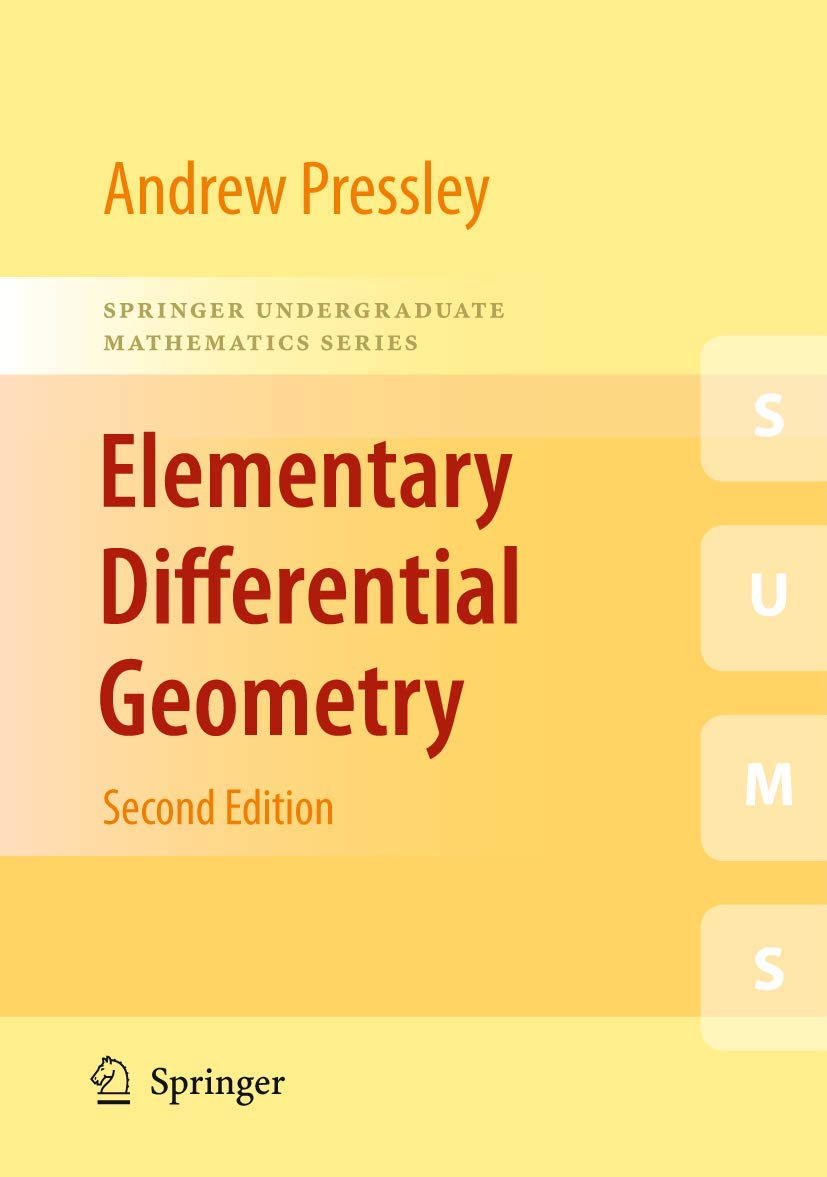
Elementary Differential GeometryComplementary
Andrew Pressley
A good second reading to consolidate the phase. Clear, well organized, with good progression and worked exercises. Works well to reinforce the geometric intuition built through Shifrin.
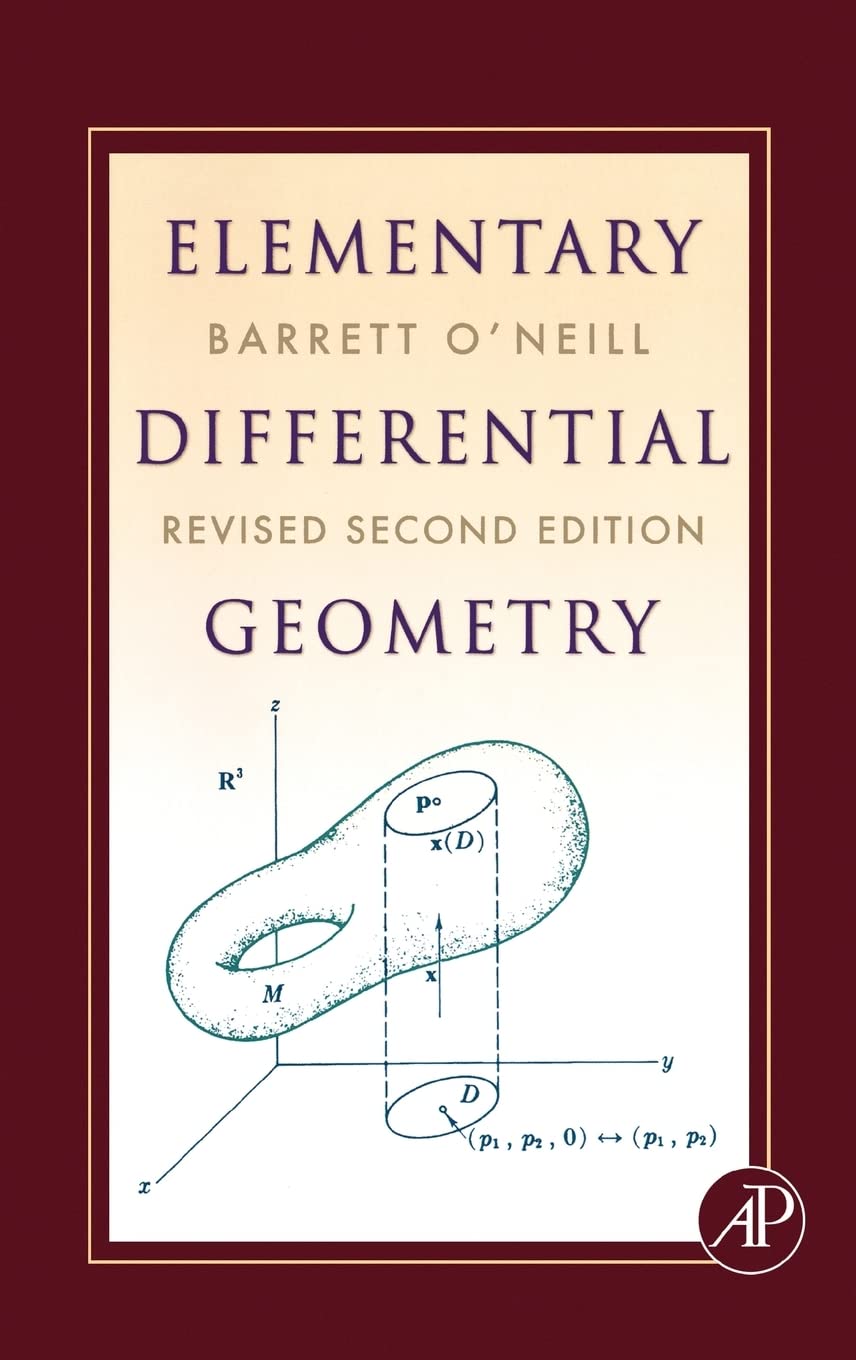
Elementary Differential GeometryComplementary
Barrett O'Neill
Friendly and quite rich, but larger and more comprehensive. Enters as complementary reading for those who want to advance at a more relaxed pace and begin to see the bridge between classical curve-and-surface geometry and Riemannian geometry.
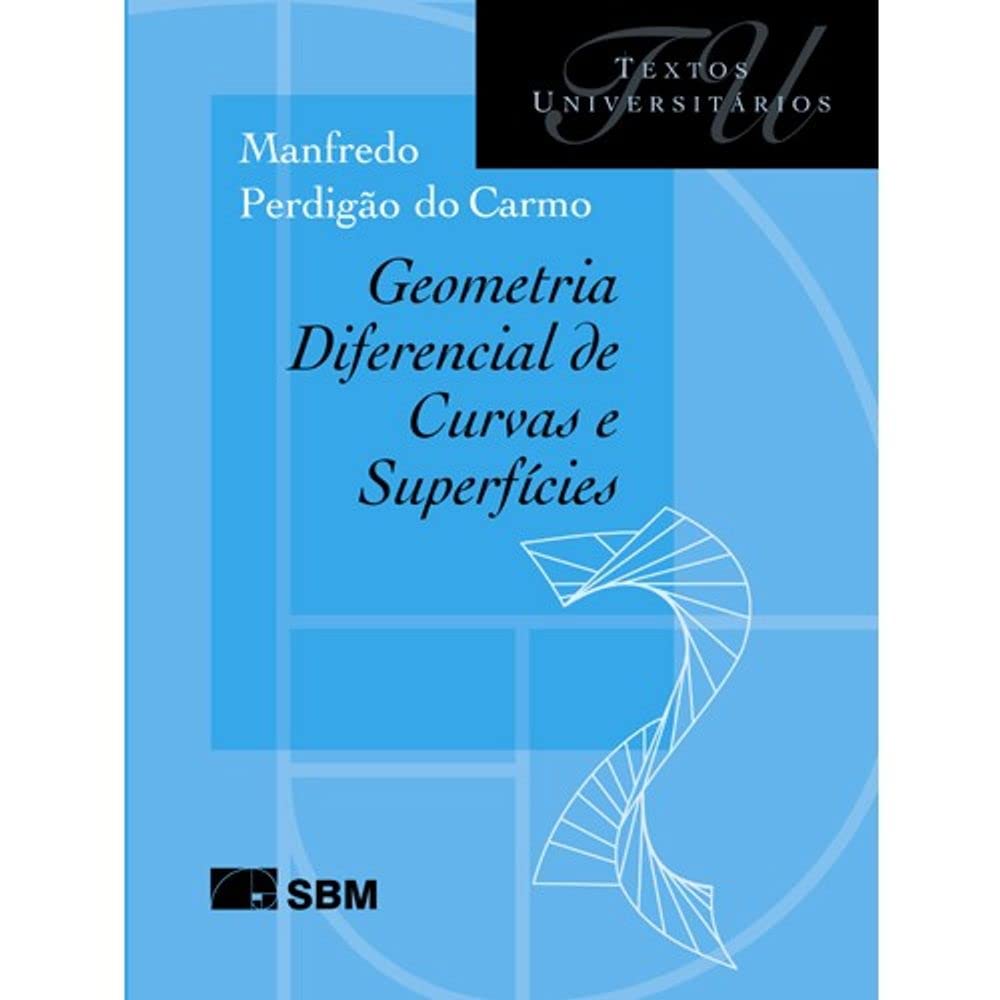
Differential Geometry of Curves and SurfacesClassic reference
Manfredo P. do Carmo
The definitive classic on curves and surfaces, but harder for self-study on a first pass. Use as a reference, second reading, or consultation to deepen specific points after gaining a foundation with Shifrin and Pressley.
What to Absorb
- Parametrized curves, arc length, and the Frenet frame
- Regular surfaces and local parametrizations
- First and second fundamental forms
- Normal, mean, and Gaussian curvatures
- Gauss map
- Geodesics on surfaces
- Theorema Egregium at an introductory level
Minimum to Move On:understanding curves, surfaces, fundamental forms, and Gaussian curvature, using Shifrin as the main text
Ready to Move On When:
- You can compute curvatures of curves and surfaces from the definitions
- You understand the first and second fundamental forms and what they measure
- You can state and interpret the Theorema Egregium
15
Undergraduate · Complete
Differential Equations
📚 3 books: 1 main + 2 complementary
Phases 5 and 6 (Elementary Linear Algebra; Multivariable Calculus)
ODEs model virtually every dynamic phenomenon in physics, biology, and engineering. The qualitative perspective — phase plane, equilibria, stability — is as important as methods for finding explicit solutions.
How to StudyUse Kreider as the main text for the first pass: elementary methods, linear equations, linear systems, and an introduction to qualitative analysis. Djairo works well as a Portuguese-language support, especially for applications and interpretation of solutions. Doering–Lopes is more rigorous and can be used selectively to deepen existence, uniqueness, and the bridge to dynamical systems. Real Analysis on the Line helps clarify existence, uniqueness, and approximation limits, but need not be treated as a formal prerequisite for this first pass.
Books
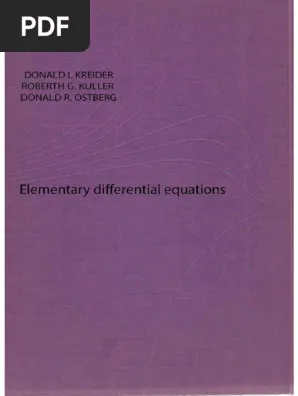
Elementary Differential EquationsMain
Kreider et al.
A classic. Well structured for a first rigorous treatment. Covers the main types of equations, linear systems, and an introduction to qualitative analysis.
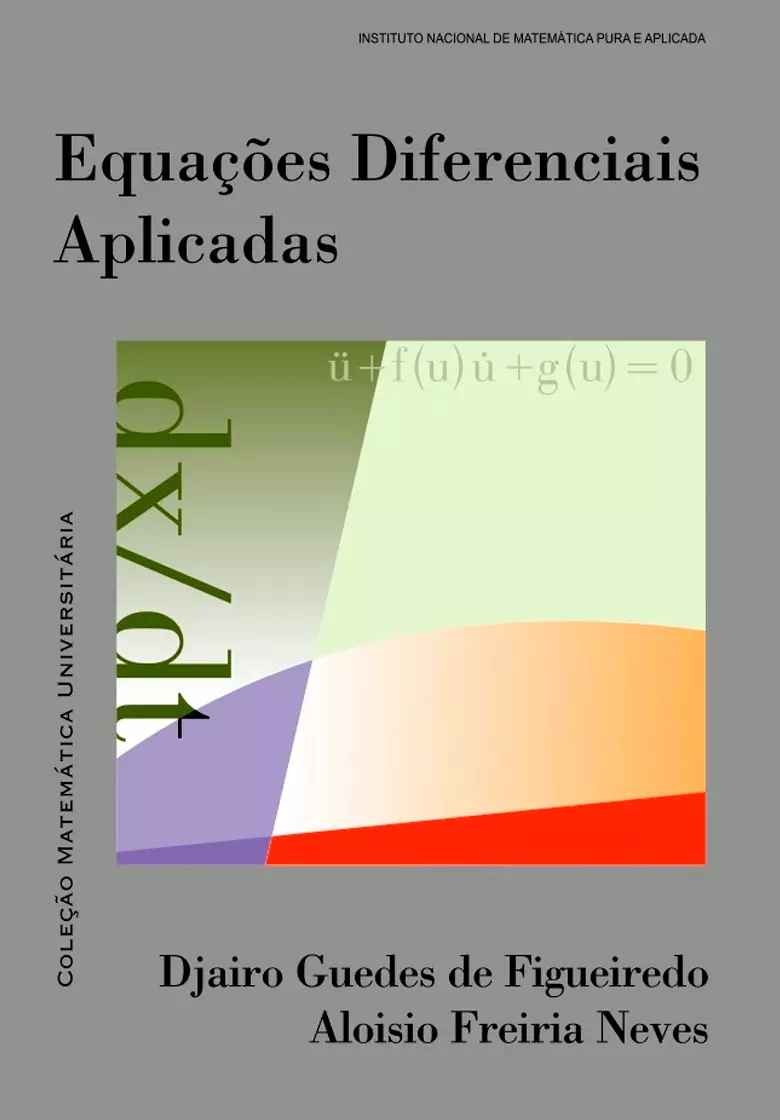
Equações Diferenciais AplicadasComplementary
Djairo Guedes de Figueiredo e Aloísio Freiria Neves
A solid national alternative for a first pass through ordinary differential equations. Develops elementary methods, basic theory, applications, and qualitative interpretation of solutions, working very well alongside Kreider. Especially useful for those who prefer a Portuguese-language reference before advancing to a more structural treatment.
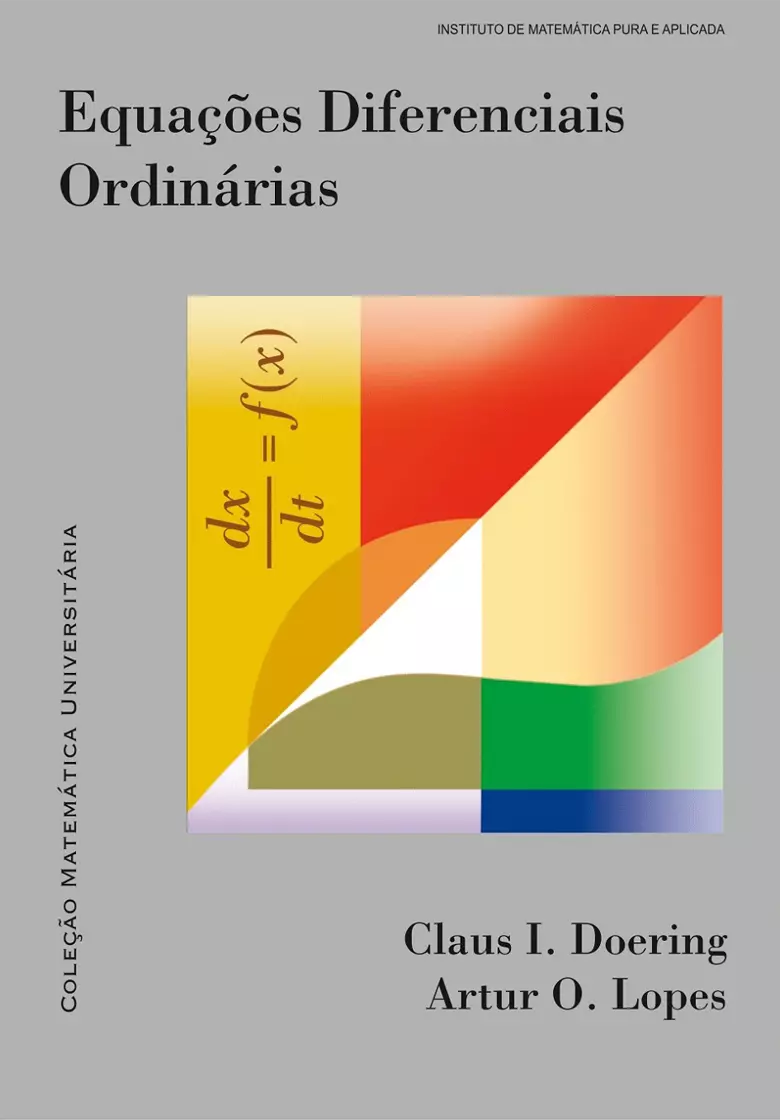
Equações Diferenciais OrdináriasComplementary
Claus Ivo Doering e Artur Oscar Lopes
A solid national reference. A good complement to Kreider, more rigorous and closer to the theory of dynamical systems.
What to Absorb
- First-order ODEs: separable, linear, exact
- Higher-order linear ODEs
- Existence and uniqueness theorem (Picard-Lindelöf)
- Linear ODE systems and the eigenvalue method
- Qualitative analysis: phase plane, equilibria, stability
Minimum to Move On:the topics above, using Kreider as the main axis
Ready to Move On When:
- You can state and apply the Picard-Lindelöf existence and uniqueness theorem
- You solve linear ODE systems using eigenvalues
- You analyze the stability of equilibria via the phase plane
16
Undergraduate · Complete
Fourier and Elementary PDE
Fourier series, Fourier transform, and classical equations
📚 4 books: 1 main + 3 complementary
Phases 7 and 15 (Real Analysis on the Line; Differential Equations)
This phase introduces two central tools of mathematical analysis: the decomposition of functions into frequencies, and the elementary study of classical partial differential equations. Fourier series, the Fourier transform, convolution, separation of variables, and boundary-value problems appear here as a natural bridge between advanced calculus, analysis, ODEs, mathematical physics, and functional analysis. The phase assumes the background accumulated through ODEs — multivariable calculus, real analysis, elementary linear algebra, and basic ODE techniques. The intention is not yet to enter advanced PDE, Sobolev spaces, or distribution theory, but to build the analytic and computational intuition those subjects demand.
How to StudyUse Djairo as the main text for the phase. The first pass should prioritize Fourier series, the Fourier transform, convolution, separation of variables, and the heat, wave, and Laplace equations. Stein & Shakarchi and Folland enter as complements to deepen the Fourier part; Valéria Iório offers a good complementary route in Portuguese for undergraduate PDE. Do not try to turn this phase into Evans, Sobolev, or distribution theory: that belongs to Advanced PDE.
Books
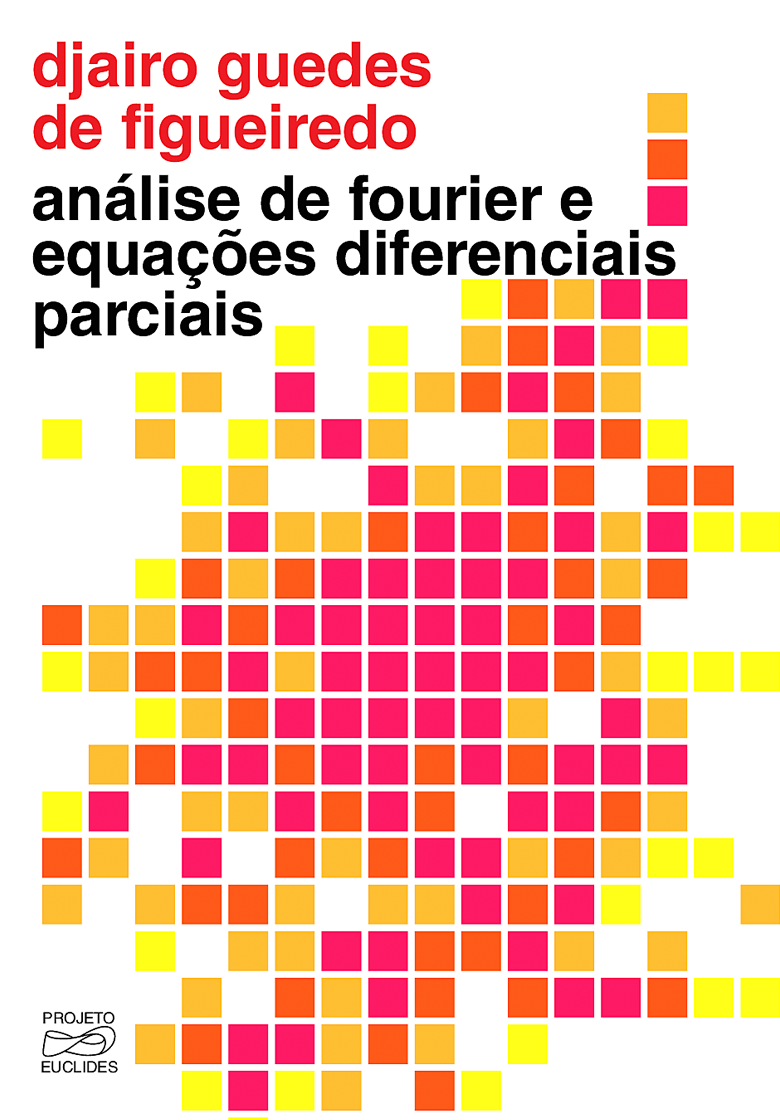
Análise de Fourier e Equações Diferenciais ParciaisMain
Djairo Guedes de Figueiredo
Main text for the phase. A natural entry point in Portuguese for Fourier series, the Fourier transform, and classical partial differential equations. Use as the base for organizing the first pass through the phase, especially on Fourier topics, separation of variables, and the heat, wave, and Laplace equations.
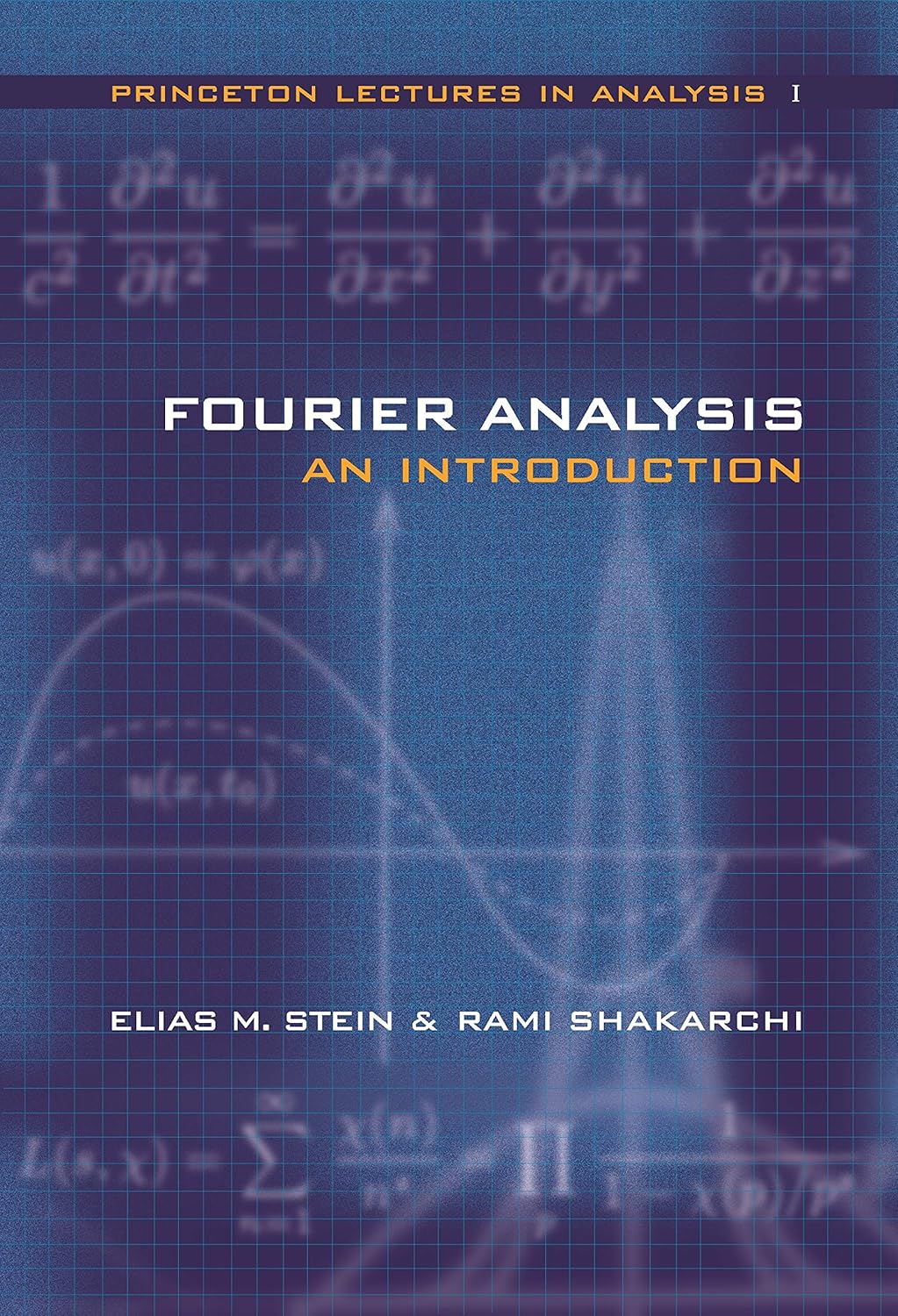
Fourier Analysis: An IntroductionComplementary
Elias M. Stein and Rami Shakarchi
A strong complement for the Fourier analysis part. Presents Fourier series, the Fourier transform, convolution, and central ideas of harmonic analysis at an accessible but mathematically serious level. Use to deepen the language of frequencies, convergence, transforms, and initial applications.
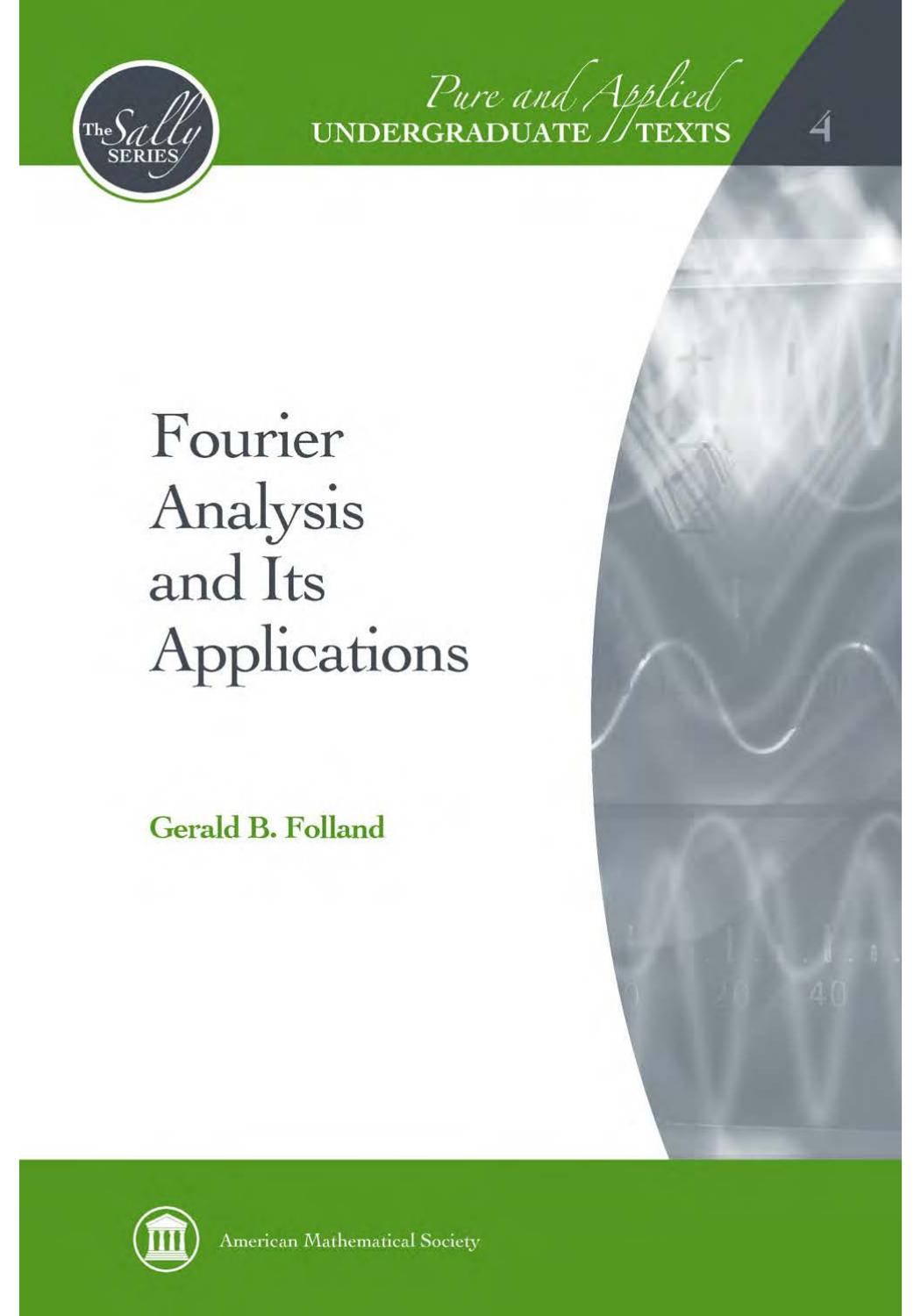
Fourier Analysis and Its ApplicationsComplementary
Gerald B. Folland
An elegant complement to reinforce the Fourier part with a clear and conceptual approach. Useful for consolidating the Fourier transform, convolution, and applications, without yet requiring the depth of an advanced harmonic analysis phase.
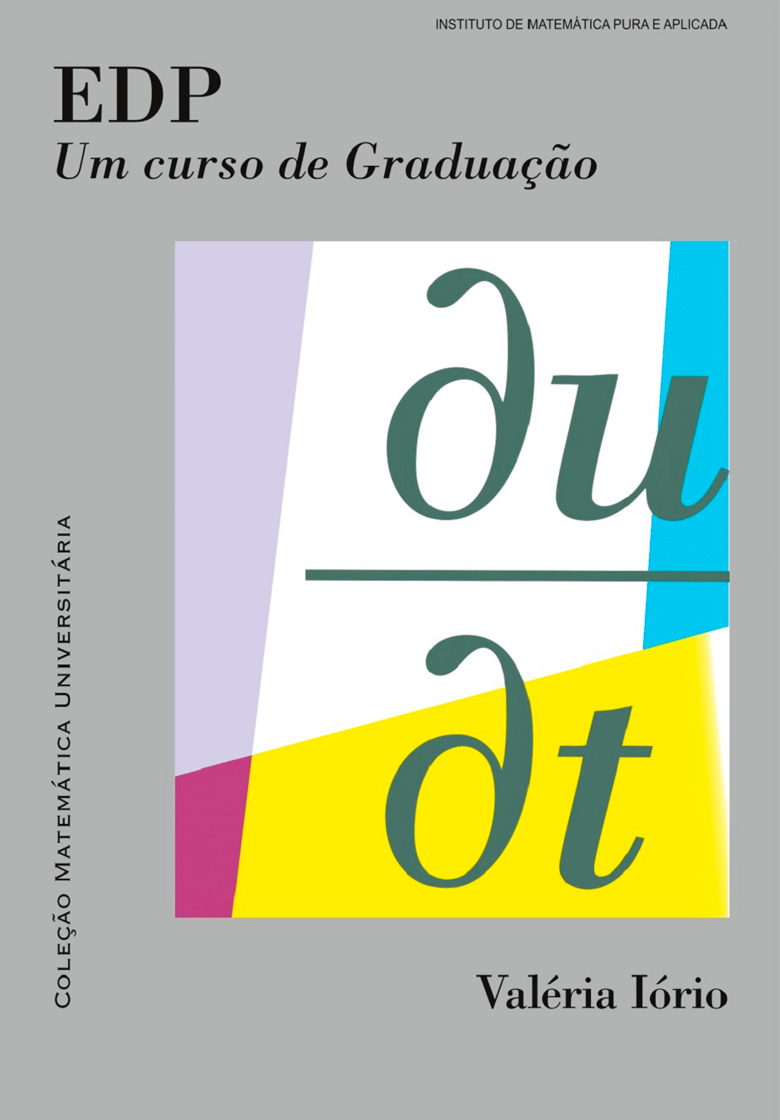
EDP: Um Curso de GraduaçãoComplementary
Valéria Iório
A Portuguese-language complement for the PDE part at the undergraduate level. Useful for studying the classical equations in a language close to the Brazilian mathematical tradition, reinforcing examples, boundary-value problems, and elementary methods.
What to Absorb
- Trigonometric series and Fourier series
- Fourier coefficients and their frequency interpretation
- Convergence of Fourier series at an introductory level
- Parseval's identity and the idea of orthogonality in function spaces
- Fourier transform at an introductory level
- Convolution and basic properties
- Separation of variables
- Heat equation
- Wave equation
- Laplace equation and simple boundary-value problems
Minimum to Move On:understanding Fourier series, the Fourier transform at a basic level, convolution, separation of variables, and the central ideas behind the heat, wave, and Laplace equations in simple problems
Ready to Move On When:
- You can compute Fourier coefficients in basic examples
- You understand the interpretation of a function in terms of frequencies
- You recognize the role of orthogonality in Fourier series
- You can apply separation of variables to simple classical problems
- You understand the difference between the heat, wave, and Laplace equations
- You are prepared to encounter functional analysis, operators, spectral theory, and advanced PDE with more analytic intuition
17
Undergraduate · Complete
Metric Spaces
The bridge between real analysis, topology, and functional analysis
📚 4 books: 1 main + 3 complementary
Phase 11 (Multivariable Analysis)
Study of metric spaces with applications relevant to Analysis. This phase builds the necessary substrate for Measure Theory, Functional Analysis, and advanced Topology. Carothers covers this ground with clarity and a progression well suited to self-study, including the Banach fixed-point theorem, Arzelà-Ascoli, and Stone-Weierstrass.
How to StudyCarothers is the main path: read carefully, solve the exercises, and focus on the chapters on metric spaces and function spaces. Zorich is a broad and sophisticated two-volume work, so it functions better as a selective complement for deepening specific topics — not as mandatory linear reading. Chaim offers an elegant perspective connecting topology and analysis, useful as parallel reading to consolidate the topological foundations.
Books
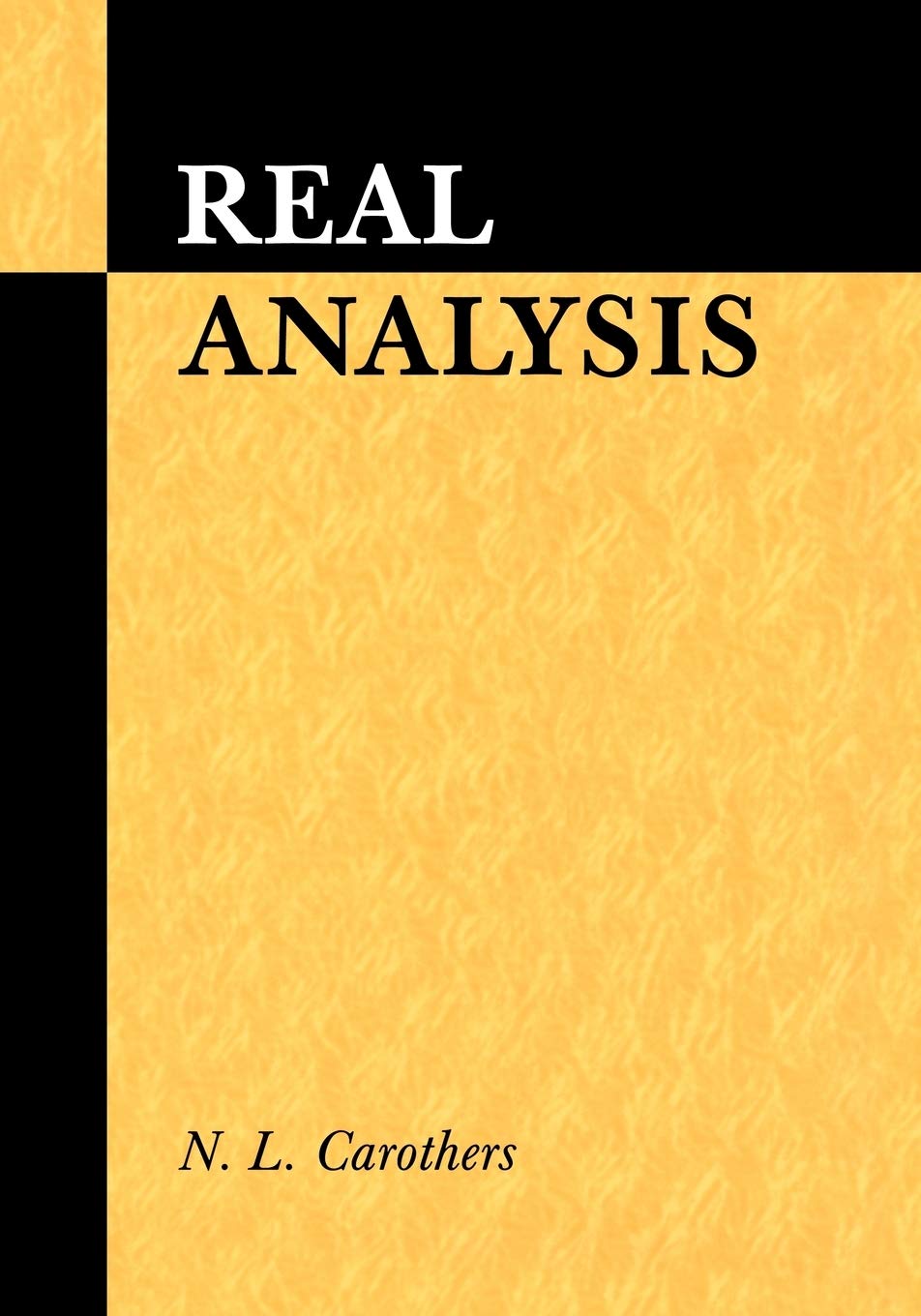
Real AnalysisMain
N. L. Carothers
Clear, well organized, and accessible for self-study. Covers metric and normed spaces, continuous function spaces, the Banach fixed-point theorem, Arzelà-Ascoli, Stone-Weierstrass, and Fourier series, with an introduction to measure and integration. Better motivated than Rudin, with a topic selection better suited to consolidating the foundation before advancing to measure theory, functional analysis, and abstract analysis.
Análise no RⁿComplementary (free)Free ↗
Roberto I. Oliveira
Though a course on analysis in Rⁿ, these notes also serve as a bridge to metric spaces: they cover topology and analysis in metric and vector spaces, continuous function spaces, the Banach fixed-point theorem, Arzelà-Ascoli, Stone-Weierstrass, and the Fréchet derivative. Use as a Brazilian complement between the intuition of Rⁿ and the abstraction of general metric spaces.
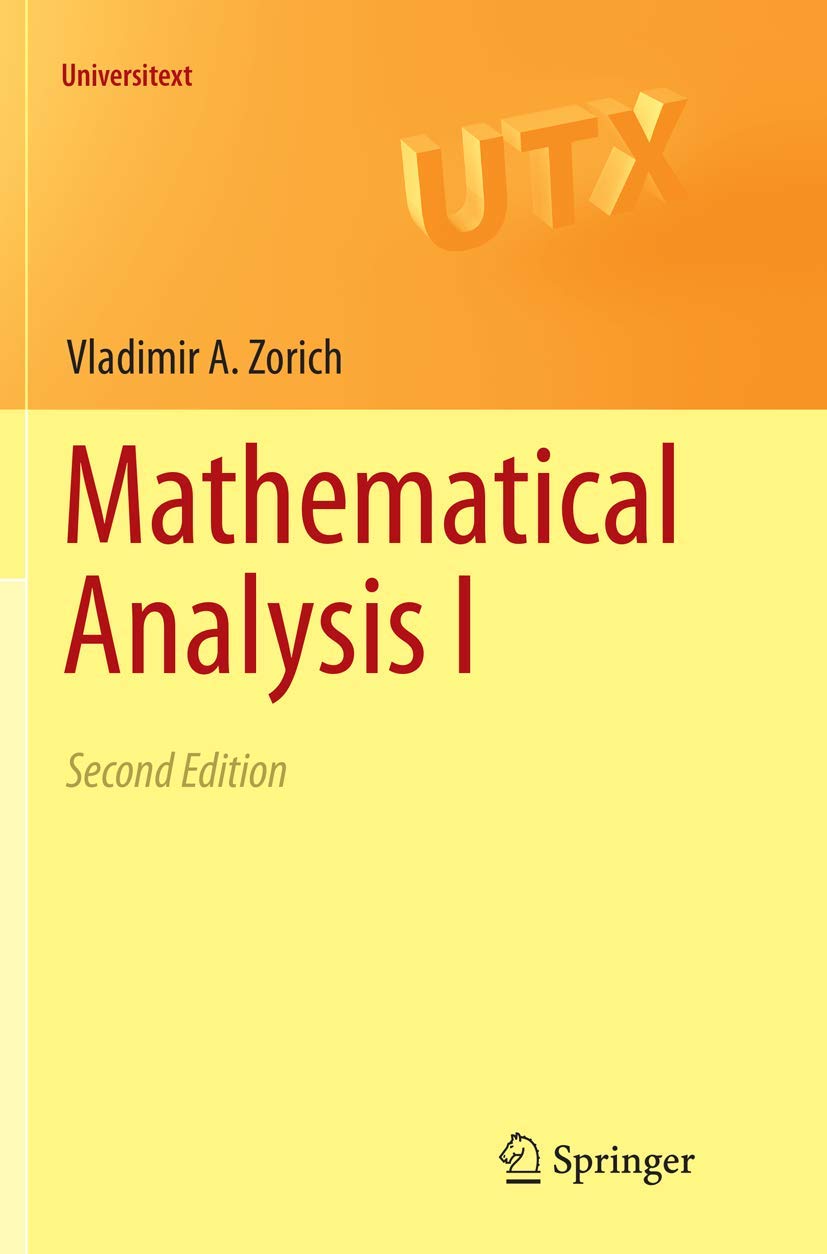
Mathematical AnalysisComplementary
Vladimir A. Zorich
A broad and sophisticated two-volume work with a very rich view of analysis. Here it functions best as a selective complement: ideal for deepening specific topics, consulting more refined proofs, and seeing connections that more direct texts do not explore. More ambitious than Carothers and less suited to linear self-study, but excellent for gaining maturity and a more structural perspective on analysis.
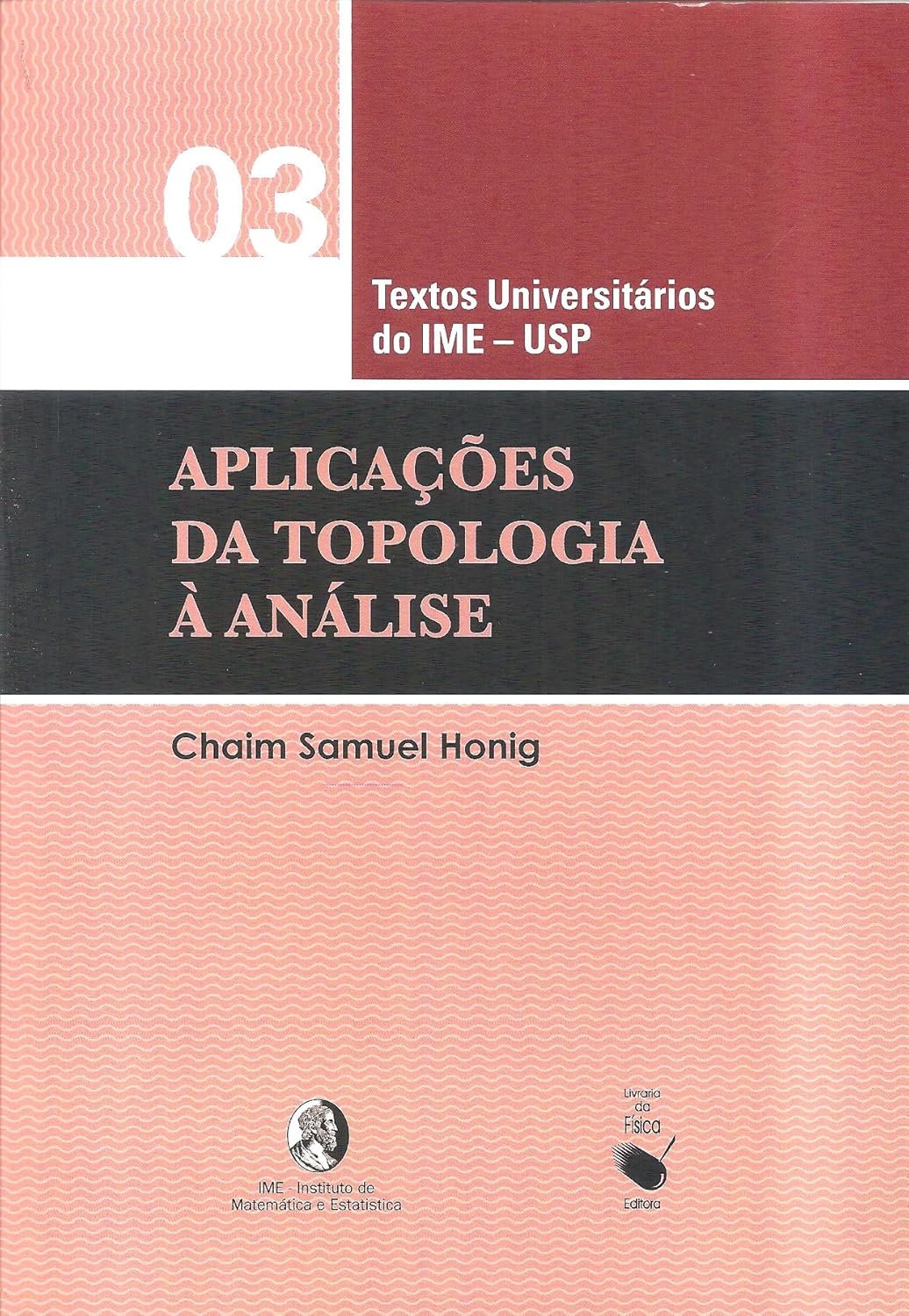
Aplicações da Topologia à AnáliseComplementary
Chaim Samuel Hönig
A national text connecting topology and analysis with elegance. A valuable read offering a different perspective on the material of the preceding phases.
What to Absorb
- Metric spaces and fundamental examples
- Sequences, convergence, and continuity
- Compactness and completeness
- Uniform continuity and function spaces
- Banach fixed-point theorem
- Arzelà-Ascoli and Stone-Weierstrass, at an introductory level
Minimum to Move On:mastery of metric spaces, convergence, continuity, compactness, and completeness, using Carothers as the main axis
Ready to Move On When:
- You can work with metric spaces, convergence, continuity, and completeness in non-trivial examples
- You understand compactness in metric spaces and can compare sequential compactness, open cover compactness, and concrete examples
- You can apply the Banach Fixed-Point Theorem in simple settings
- You recognize how function spaces arise naturally in analysis and why they require a more general language
- You understand the role of results like Arzelà-Ascoli and Stone-Weierstrass at a conceptual level, without needing to master all advanced versions
18
Undergraduate · Complete
Algebra II
Rings, groups, factorization, polynomials, and modules
📚 4 books: 1 main + 3 complementary
Phases 8 and 9 (Linear Algebra; Algebra I)
This phase consolidates a second pass through abstract algebra at the undergraduate level. The focus is on rings, ideals, domains, factorization, polynomials, groups, actions, Sylow theorems, solvable groups, and a first encounter with modules. It serves as a bridge between Algebra I and Fields and Galois Theory, and also better prepares the reader for Advanced Algebra, Commutative Algebra, and Algebraic Geometry. The intention is not yet to reach the encyclopedic depth of graduate algebra, but to acquire enough structural maturity to follow Galois and the later algebraic phases.
How to StudyUse Aluffi as the main text for the phase. The first pass should prioritize groups, rings, ideals, quotients, actions, polynomials, factorization, and a first notion of modules. Herstein is excellent for exercises and algebraic maturity, but more demanding; Garcia & Lequain works as a Brazilian reference close to a real Algebra II course; Artin should be used to deepen the connection with linear algebra and build structural intuition. Do not attempt to read all the complementary books in full: choose topics as gaps arise during the main study.
Books
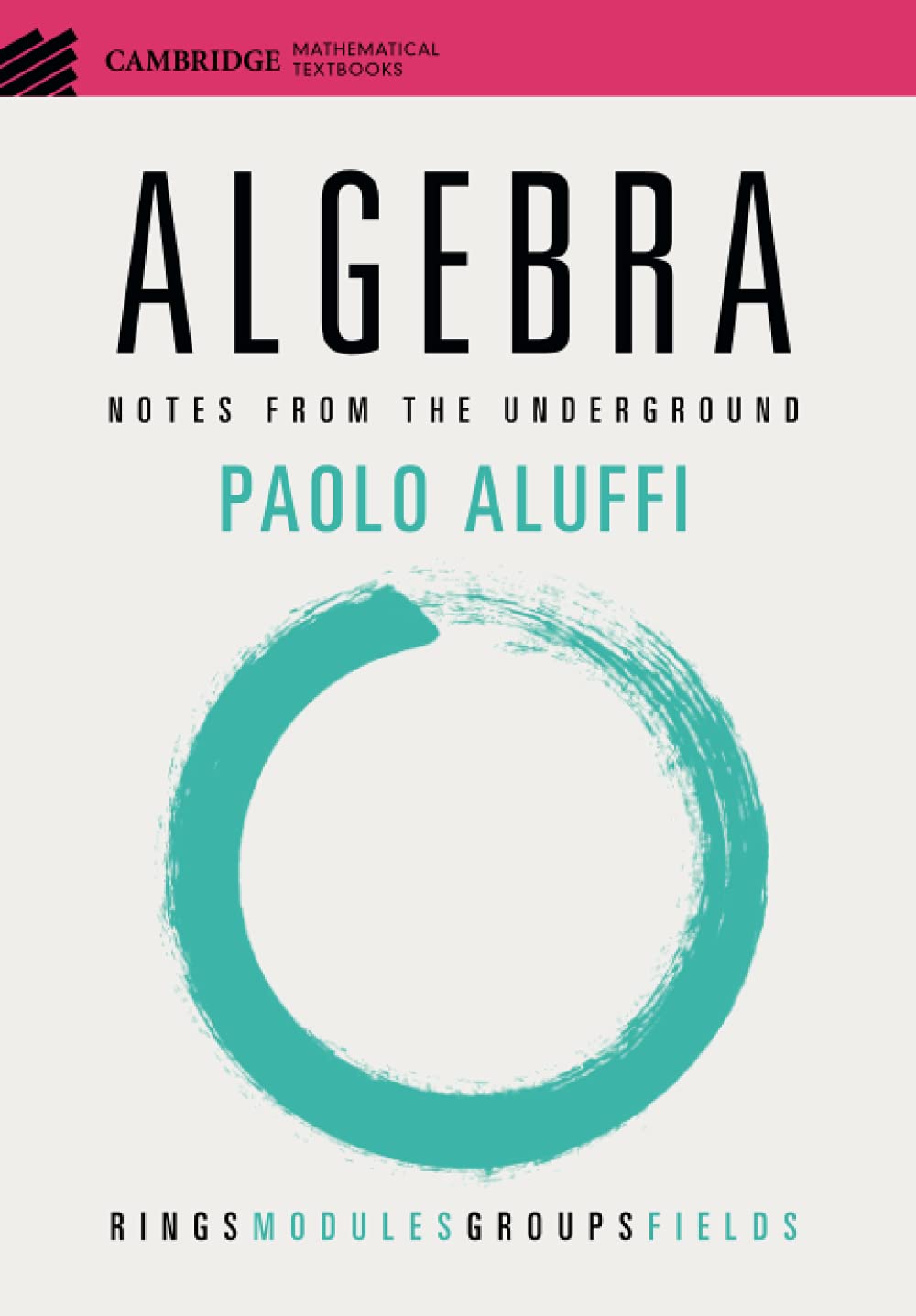
Algebra: Notes from the UndergroundMain
Paolo Aluffi
Main text for the phase. A modern, well-written entry point more suited to self-study than many classic Algebra II texts. Use to consolidate groups, rings, homomorphisms, quotients, actions, polynomials, and the structural language that prepares Galois and later algebra. Paolo Aluffi is also the author of Algebra: Chapter 0, which appears further ahead in the Advanced Algebra phase; here, however, its role is to serve as a more accessible undergraduate text.
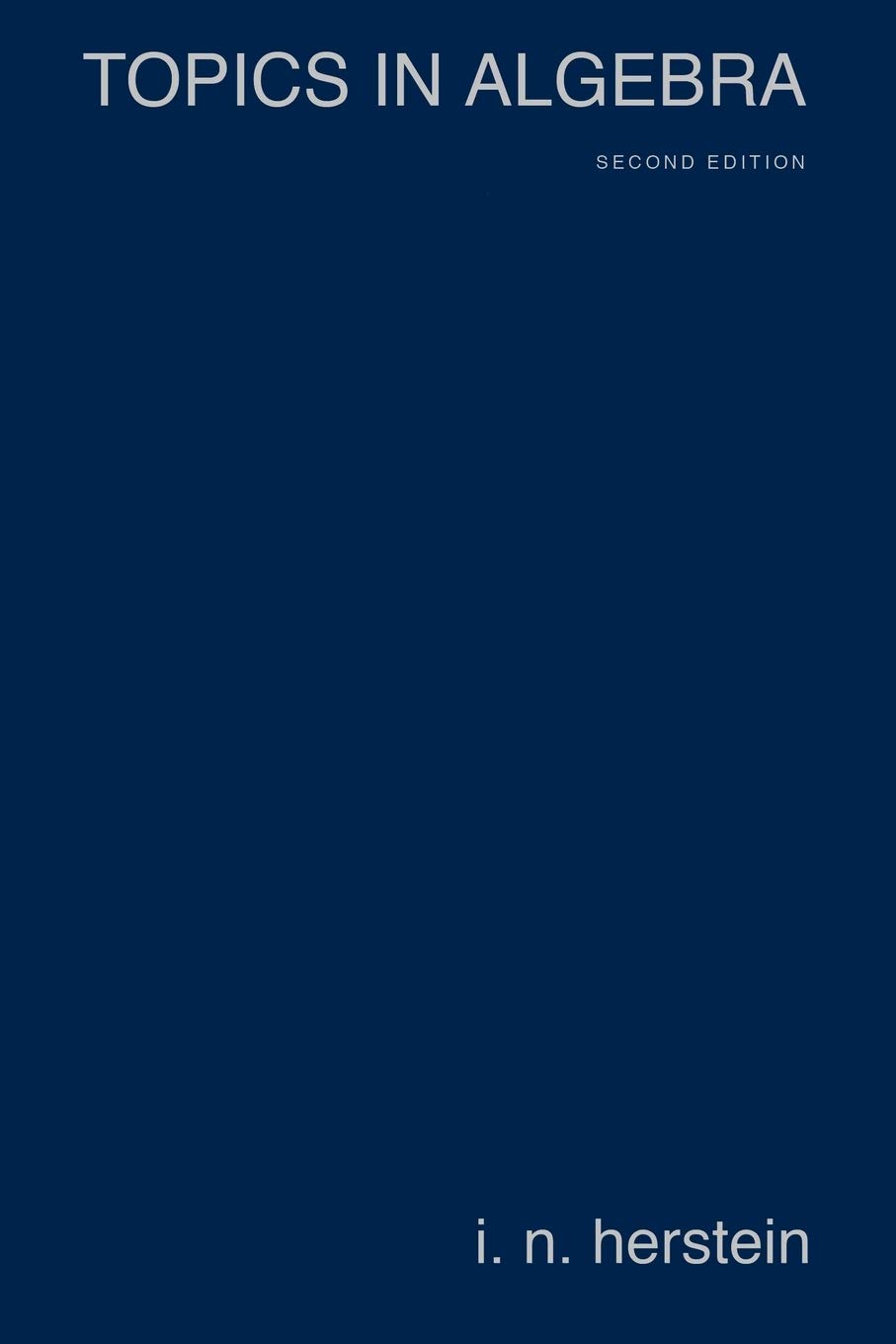
Topics in AlgebraComplementary
I. N. Herstein
A demanding classic of abstract algebra, with elegant treatment of groups, rings, fields, and extensions. Works very well as a complement for building maturity and solving real problems, but can feel drier than modern texts. Use selectively to reinforce proofs, examples, and exercises.
Elementos de ÁlgebraComplementary
Arnaldo Garcia e Yves Lequain
A Brazilian reference closely aligned with Algebra II courses. Covers rings, domains, unique factorization, polynomials, groups, Sylow, solvable groups, and finitely generated modules, with applications to Jordan canonical form. Valuable as a complement and reference, especially for reflecting the Brazilian algebra course tradition, but may be less friendly for a first self-study reading.
AlgebraComplementary
Michael Artin
An excellent conceptual complement, especially for the interaction between abstract algebra and linear algebra. Helps to understand groups, rings, modules, symmetries, representations, and canonical forms with a more matrix-based and geometric intuition. Does not by itself replace the systematic coverage of the phase, but greatly deepens structural understanding.
What to Absorb
- Rings, subrings, homomorphisms, and ideals
- Quotient rings
- Domains, fields, and divisibility
- Euclidean, principal, and factorial domains at an introductory level
- Polynomial rings
- Irreducibility and factorization
- Quotient groups and group actions
- Sylow theorems at an introductory level
- Solvable groups at an introductory level
- Initial notion of modules and their relation to linear algebra
Minimum to Move On:understanding rings, ideals, quotients, factorization, polynomials, group actions, Sylow at a basic level, and the idea of a module as a structural generalization of vector spaces
Ready to Move On When:
- You can work with rings, ideals, and quotients in basic examples
- You understand the distinction between Euclidean, principal, and factorial domains at an introductory level
- You can work with polynomials and apply simple irreducibility criteria
- You understand quotient groups, group actions, and the Sylow theorems in simple examples
- You recognize how modules generalize vector spaces
- You are prepared to study field extensions and Galois theory with greater algebraic maturity
19
Undergraduate · Complete
Fields and Galois Theory
The crowning of Algebra II · Exit point of the Undergraduate Track
📚 2 books: 1 main + 1 complementary
Phase 18 (Algebra II)
Where abstract algebra converges into one of the most elegant theories in mathematics. Field extensions, Galois groups, the fundamental theorem of Galois theory. And the definitive answer to a centuries-old question: why is there no general formula for degree-5 equations? Anyone who found Algebra I compelling will recognize themselves here.
How to StudyStewart is accessible and very well motivated, with rich historical context. Morandi is more rigorous and covers field theory with greater depth, making it a good complement for those who want extra solidity before entering advanced algebra.
Books
Galois TheoryMain
Ian Stewart
Accessible, well motivated, and with excellent historical context. Covers field extensions, Galois groups, and the fundamental theorem with clarity. Ideal for a first reading.
Fields and Galois TheoryComplementary
Patrick Morandi
More advanced and with broader coverage of field theory. A good complement to Stewart for those who want extra solidity before entering advanced algebra or algebraic geometry.
What to Absorb
- Field extensions: degree, algebraic and transcendental extensions
- Splitting field and normal extensions
- Galois group and its action
- Fundamental theorem of Galois theory
- Insolvability by radicals for degree ≥ 5
- Ruler-and-compass constructions
Minimum to Move On:the topics above via Stewart
Exit point of the Undergraduate Track. Ready when:
- You understand the statement and proof of the Fundamental Theorem of Galois Theory
- You can compute the Galois group of concrete extensions
- You understand why the symmetric group S₅ implies insolvability by radicals
Upon completing the Undergraduate Track
- Congratulations: you will have followed a path close to the core of a bachelor's degree in Mathematics.
- You will have a foundation in analysis, algebra, topology, geometry, differential equations, complex variables, metric spaces, advanced abstract algebra, and Galois theory.
- The final and structuring phases of the undergraduate path — Multivariable Analysis, Topology, Geometry of Curves and Surfaces, Metric Spaces, Algebra II, and Fields and Galois Theory — lay the ground for the Complete Track, giving you the analytic, topological, geometric, and algebraic maturity needed for the advanced topics ahead.
- If you want to continue into the Complete Track, the focus shifts to mathematical maturity: measure theory, functional analysis, operators, advanced geometry, and global structures.
↑ Back to phase map
About the Complete Track
The Complete Track can still be used for independent study, but it presupposes a mathematically mature reader: late undergraduate, master's, doctoral, or equivalent preparation. The intention is not to offer a simple "from-zero" route to graduate-level topics, but to point to advanced books that I consider well suited to those who are already grounded in mathematics. In many phases, the value of the curation lies less in promising a linear path and more in identifying references that can be studied with autonomy, patience, and the right background. My area is functional analysis and operator theory, so the phases closest to that direction reflect direct experience; the books in more distant phases were chosen based on conversations with those who used them. Do not try to do everything: it is impractical and unnecessary. Enter with a direction in mind.
Non-linear paths
After the Undergraduate Track, not everyone needs to follow the complete order rigidly. Those drawn to analysis can prioritize measure theory, functional analysis, and operators. Those drawn to geometry can advance through manifolds, differential geometry, and Riemannian geometry. Those drawn to algebra can follow through Galois theory, commutative algebra, and algebraic geometry. Use the Complete Track as a map of possibilities, not as a rigid prescription.
20
Complete
Measure Theory and Integration
Indispensable for those who continue in mathematics
📚 5 books: 2 main + 2 reference + 1 reference
Phases 6 and 7 (Multivariable Calculus; Real Analysis on the Line)
Measure theory generalizes and rigorizes the concept of integration far beyond what Riemann allows. The Lebesgue integral is a prerequisite for Functional Analysis, Probability Theory, and PDEs. Choose one of the two main books according to the depth you want: Bartle is more accessible, Cohn is more complete.
How to StudyThe central concept is the σ-algebra. Understand why each axiom is necessary through counterexamples. The three major convergence theorems — Monotone, Dominated, Fatou — must be understood deeply: they appear throughout advanced analysis. Bartle is a good entry point if Cohn feels dense at first.
Books
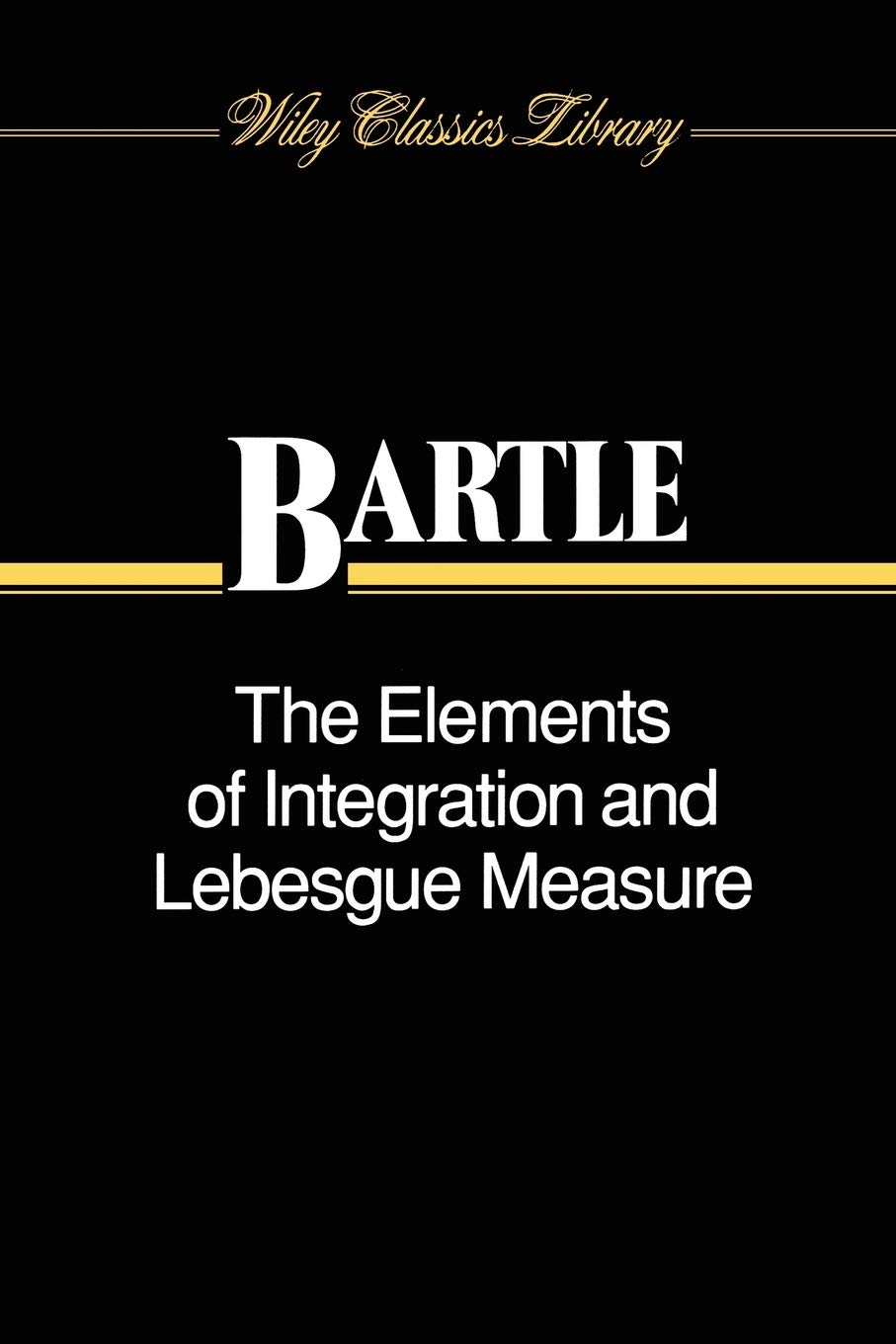
The Elements of Integration and Lebesgue MeasureMain · more accessible
Robert G. Bartle
For self-study, probably the most friendly of all the measure theory books on this list. Clear, well motivated, and carefully paced. Covers less ground than Cohn, but what it covers, it covers very well. A good entry for those who want to reach the Lebesgue integral without getting lost along the way.
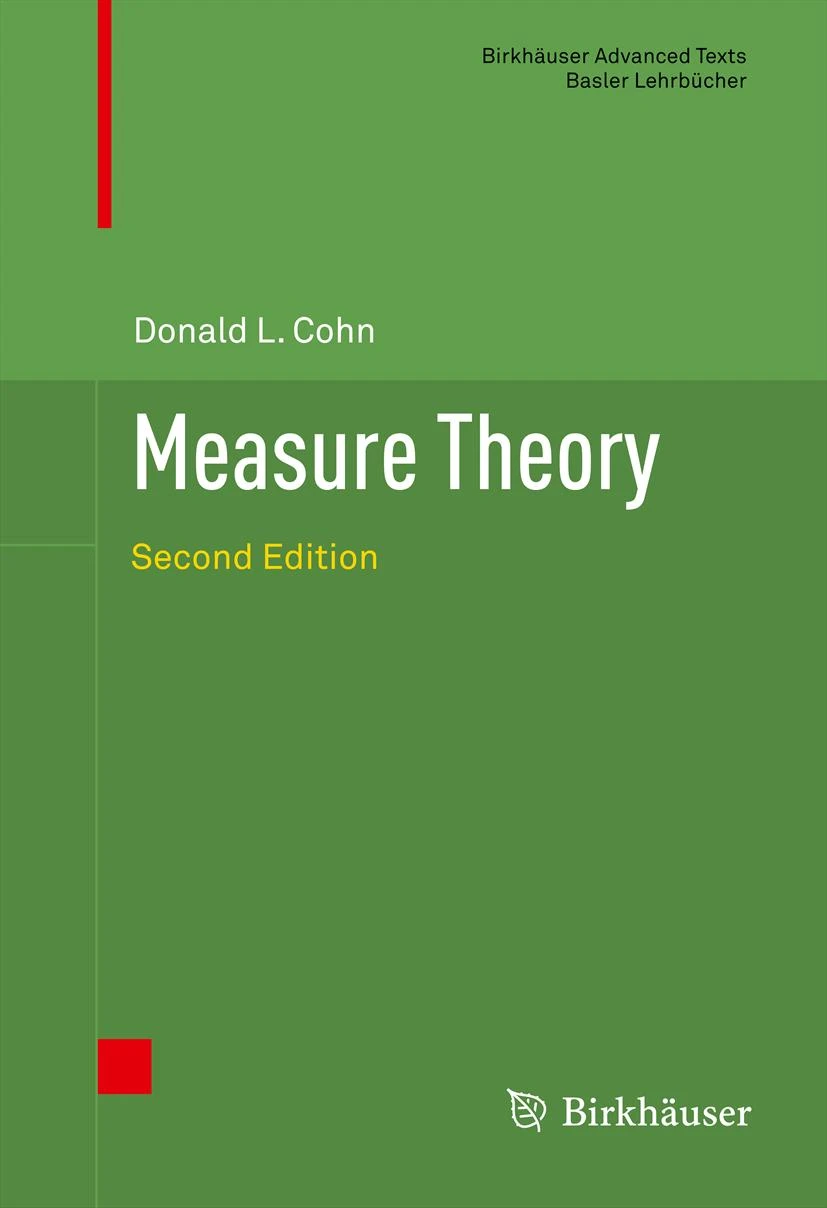
Measure TheoryMain · more complete
Donald L. Cohn
Solid, well organized, and the book I would choose for a first serious reading in measure theory. Covers abstract measure, Lebesgue integration, Lᵖ spaces, and the convergence theorems with rigor and clarity.
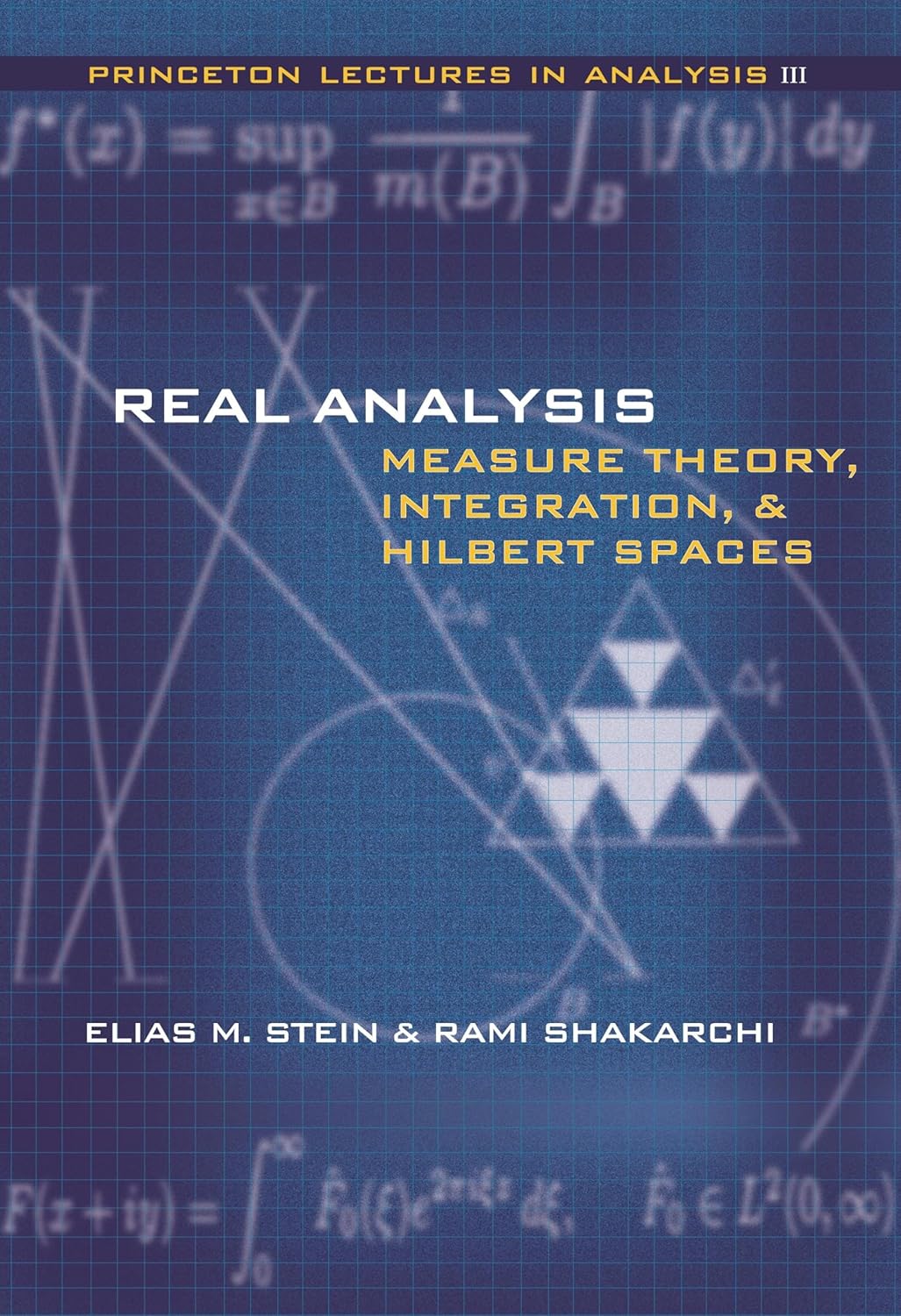
Real AnalysisReference
Elias Stein e Rami Shakarchi
Part of the Princeton Lectures in Analysis series. Elegant, with rich connections to Fourier Analysis and Partial Differential Equations. An excellent complement.
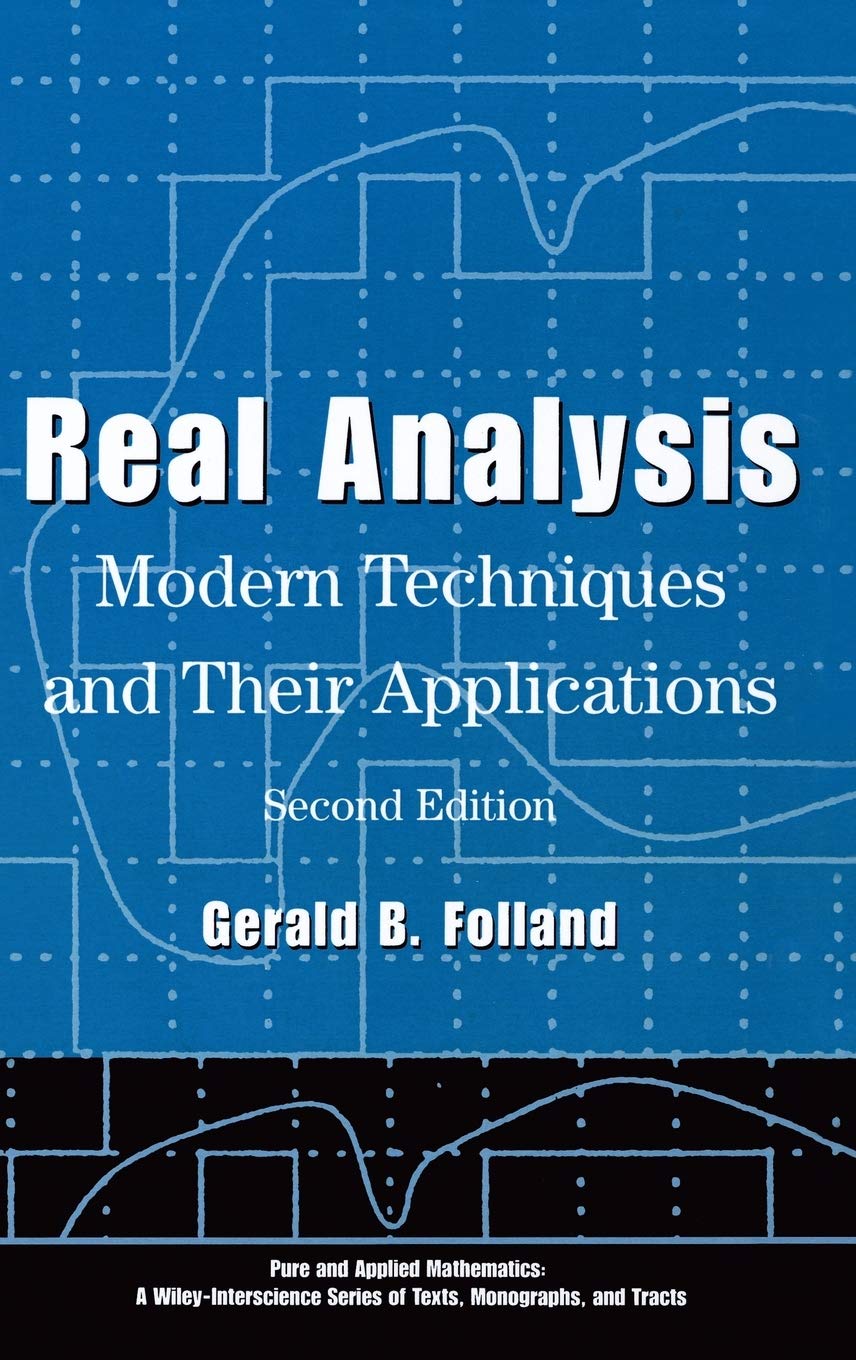
Real AnalysisReference
Gerald B. Folland
The most complete and modern of the four. Covers measure theory, Lebesgue integration, Lᵖ spaces, Fourier analysis, topology, functional analysis, and even introductory probability, all with contemporary notation. A bedside reference for every analyst.
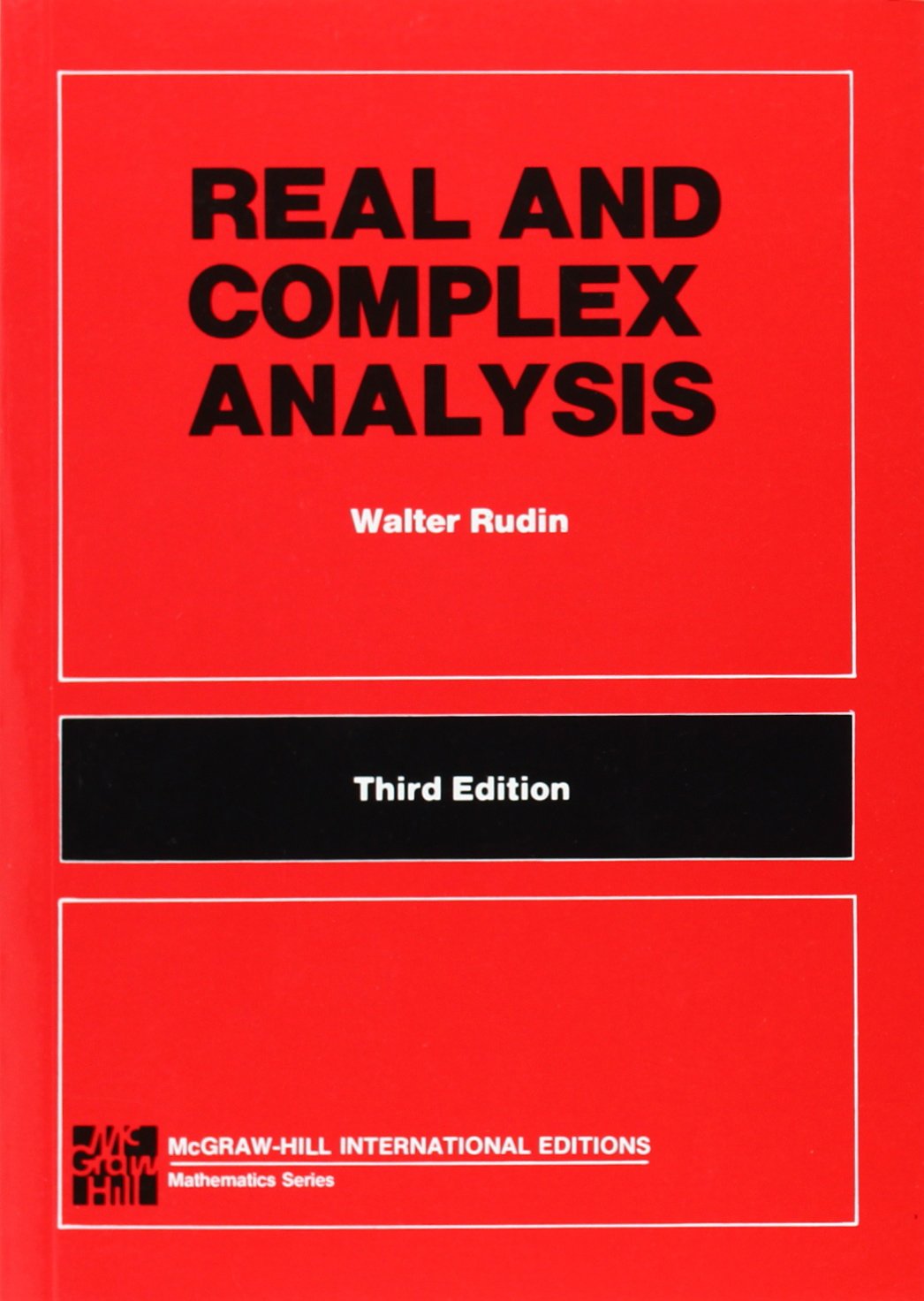
Real and Complex AnalysisReference
Walter Rudin
The "Big Rudin," as it is known. Treats measure and integration together with complex analysis in a single volume, with Rudin's characteristic elegance and concision. More demanding than Cohn and Folland, with genuinely challenging exercises: use as a reference and additional reading once the theory is consolidated.
What to Absorb
- σ-algebras and measure spaces
- Lebesgue measure on ℝⁿ
- Lebesgue integral and its properties
- Convergence theorems: Monotone, Dominated, Fatou
- Lᵖ spaces and Hölder's and Minkowski's inequalities
- Product measures and the Fubini-Tonelli theorem
Minimum to Move On:the topics above, using Bartle or Cohn as the main text
Ready to Move On When:
- You understand the difference between Riemann and Lebesgue integration and when it matters
- You apply the three convergence theorems correctly
- You work with Lᵖ spaces and Hölder's inequality
21
Complete
Probability Theory
Modern probability as measure theory applied to events, random variables, and convergence
📚 4 books: 1 main + 2 complementary + 1 advanced
Phase 20 (Measure Theory and Integration)
Modern probability can be understood as a natural continuation of measure theory. Probability spaces, random variables, expectation, independence, modes of convergence, and limit theorems appear here in rigorous language. This phase does not replace Measure Theory: it depends on it and deploys it in a probabilistic context. It is also not about applied statistics, data science, or machine learning, but about the mathematical foundations of probability.
How to StudyStart with Rosenthal: it is the most suitable entry for a first rigorous pass through modern probability after Measure Theory. The goal is not to replace measure theory, nor to turn this phase into applied statistics, but to consolidate the mathematical language of probability. Billingsley can be used to deepen the connection between probability and measure theory and, for those with a strong interest in probability, can even serve as a bridge for studying both subjects in an integrated way. Durrett broadens the repertoire with examples and central results; Kallenberg should be treated as an advanced reference, not as required reading.
Books
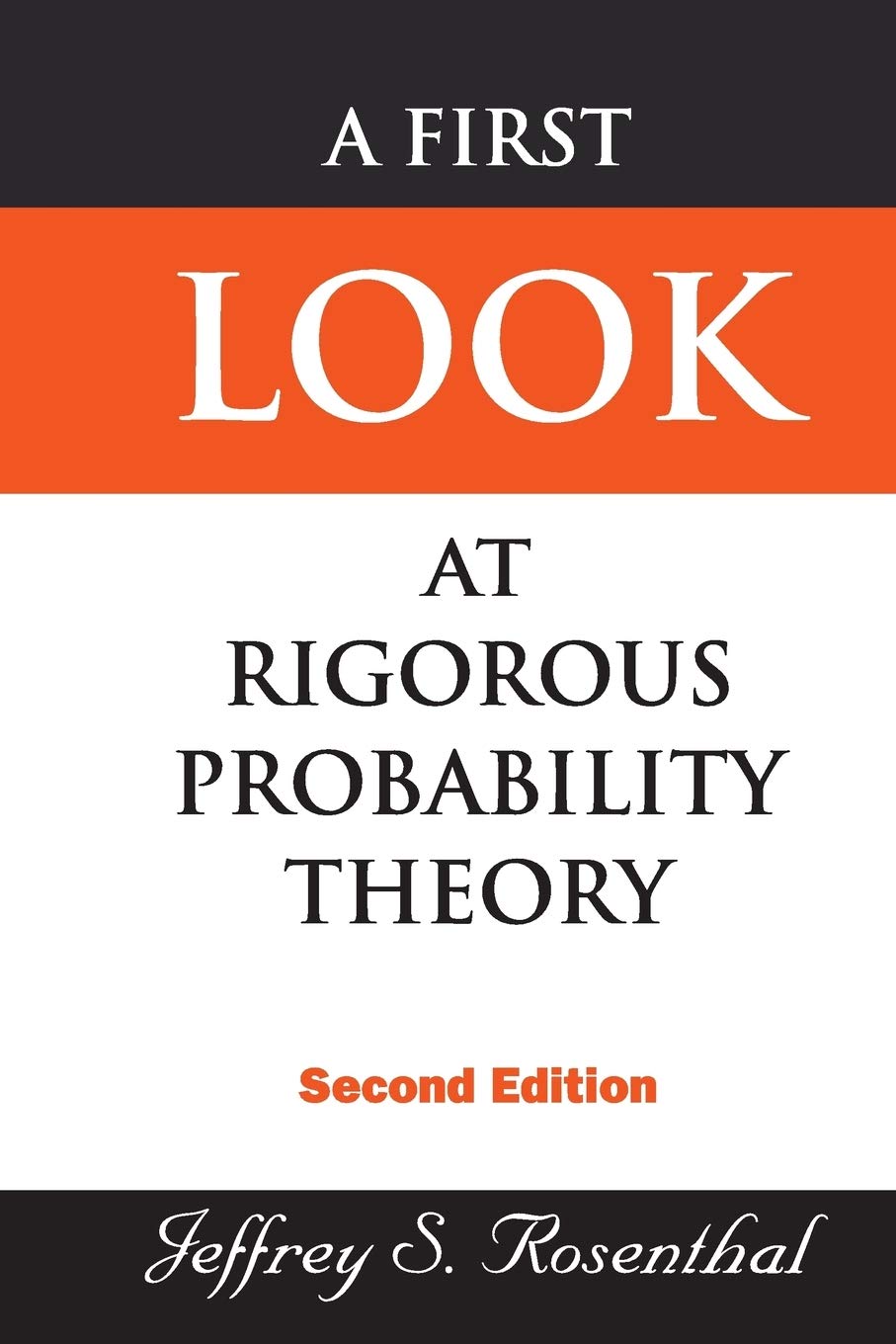
A First Look at Rigorous Probability TheoryMain
Jeffrey S. Rosenthal
The best entry point for rigorous probability after Measure Theory. Relatively short, clear, and suitable for self-study. Use as the main text for the phase, prioritizing probability spaces, random variables, expectation, independence, convergence, and limit theorems.
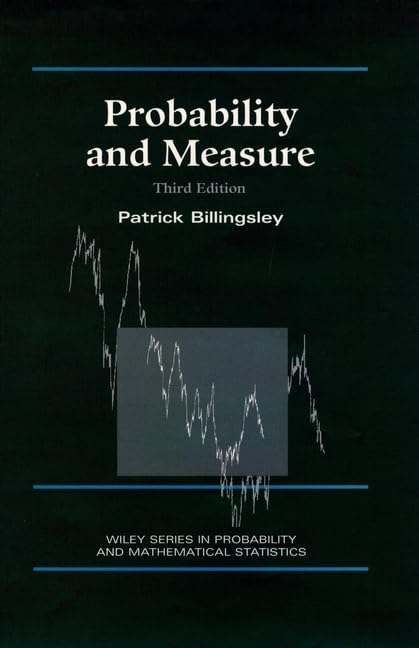
Probability and MeasureComplementary
Patrick Billingsley
A classic that deepens the relationship between probability and measure theory. More demanding than Rosenthal, but excellent for consolidating the modern formulation of the field. Can be used selectively to build maturity in measure, distribution, convergence, and limit laws; for those with a strong interest in probability, it can also serve as a bridge for studying both subjects in an integrated way.
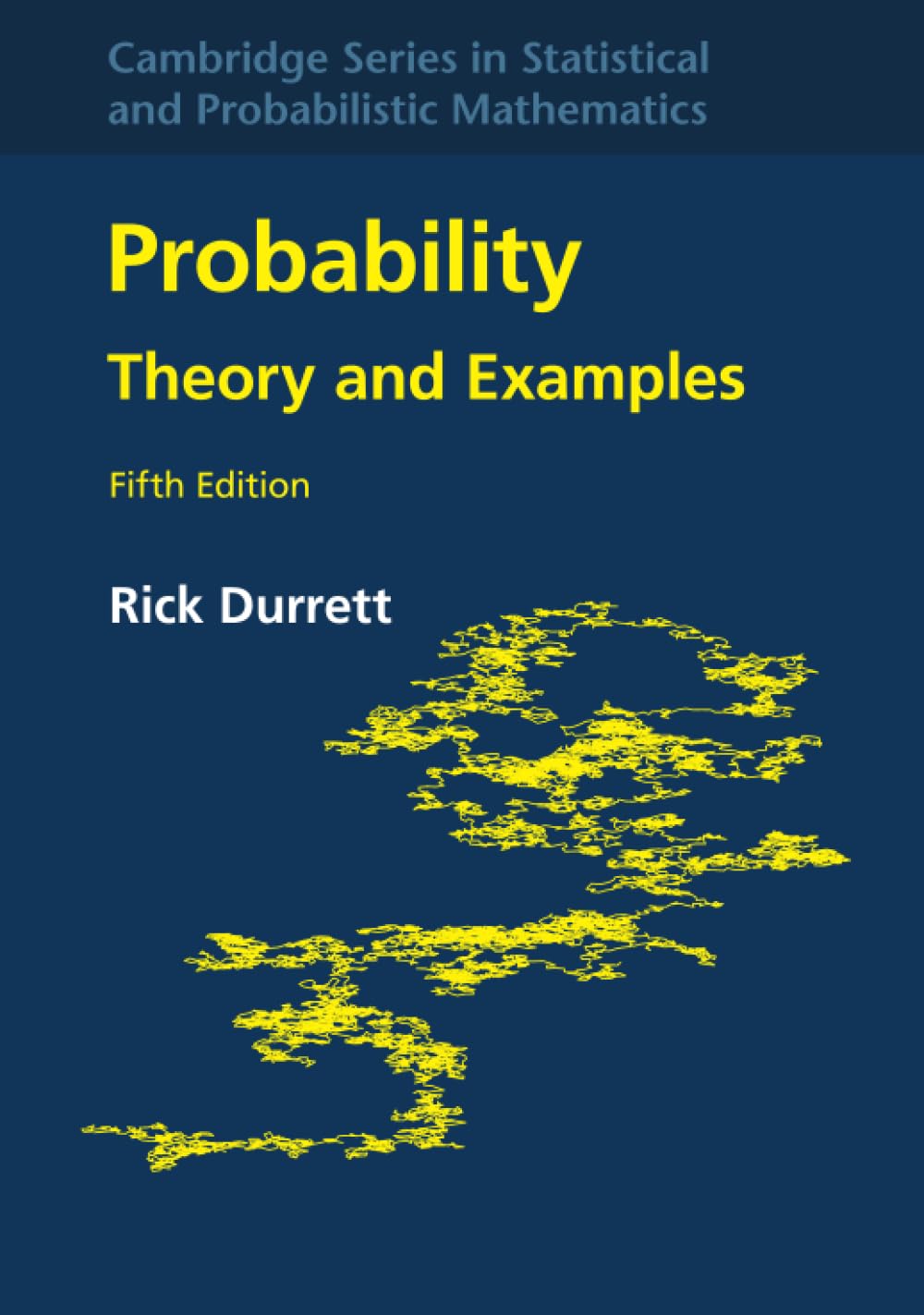
Probability: Theory and ExamplesComplementary
Rick Durrett
A broad and robust text, with many examples and central results. Does not need to be read in full at this phase. Works best as a complement for deepening specific topics, especially convergence, independence, limit laws, and early stochastic processes.
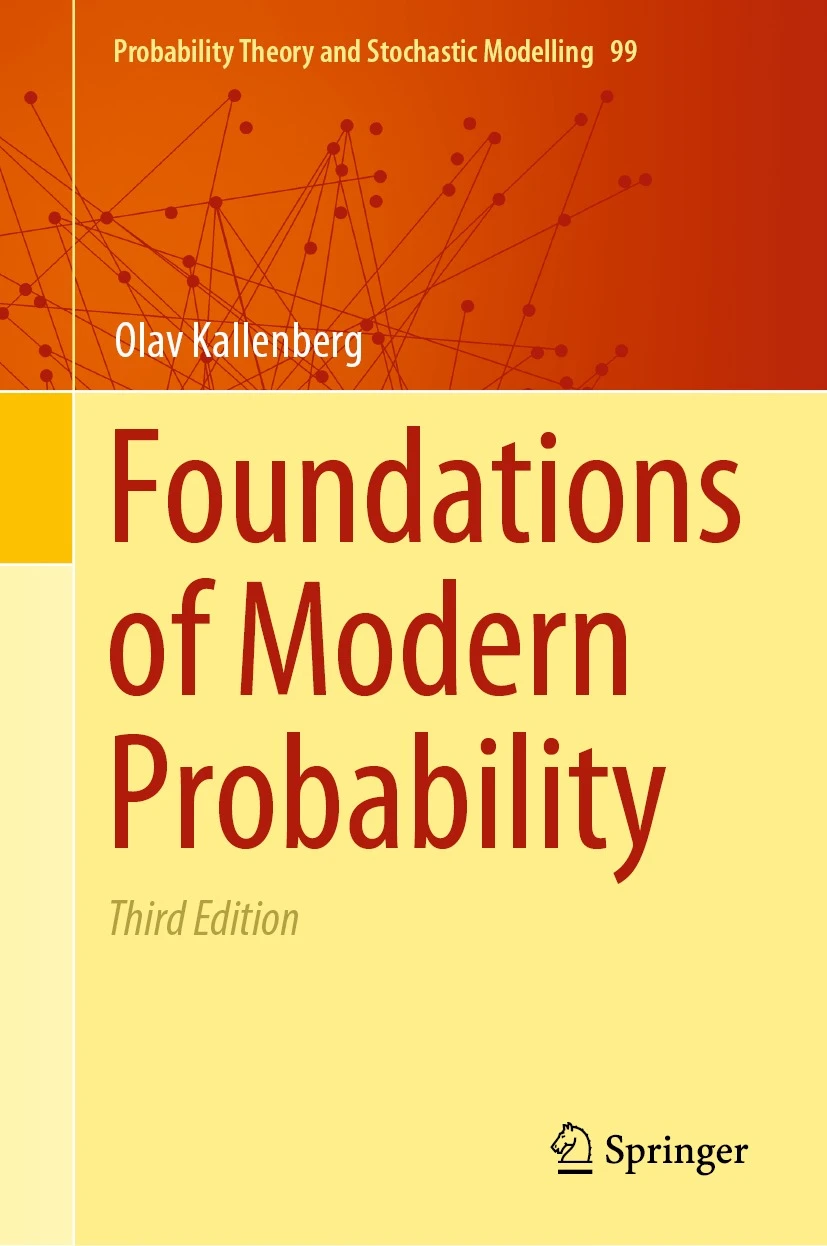
Foundations of Modern ProbabilityAdvanced
Olav Kallenberg
An advanced and encyclopedic reference in modern probability. Not required reading at this point. Serves as a pointer for those who want to go seriously deeper into probability, stochastic processes, or related areas.
What to Absorb
- Probability spaces and events
- Random variables as measurable functions
- Distributions and laws of random variables
- Expectation as an integral
- Independence
- Modes of convergence of random variables
- Borel-Cantelli lemma
- Law of Large Numbers
- Central Limit Theorem in basic formulation
Minimum to Move On:understanding random variables as measurable functions, expectation as an integral, independence, the main modes of convergence, and the central ideas behind the Law of Large Numbers and the Central Limit Theorem
Ready to Move On When:
- You can translate probabilistic language into the language of measure theory
- You understand random variables as measurable functions
- You can compute and manipulate expectation as an integral
- You distinguish almost sure convergence, convergence in probability, convergence in Lp, and convergence in distribution
- You recognize independence in examples and can use it in basic proofs
- You understand the role of limit theorems in the structure of modern probability
22
Complete
Functional Analysis
Linear algebra in infinite dimensions
📚 3 books: 1 main + 2 complementary
Phases 12, 17, and 20 (Topology; Metric Spaces; Measure Theory and Integration)
The study of infinite-dimensional vector spaces. In finite dimensions, topology is almost dispensable; in infinite dimensions, it is central. A demanding and elegant subject — take your time. Botelho is a good first pass for those who want to build the foundations of Functional Analysis before consulting more specialized texts. The examples coming from Lp spaces and operators on function spaces make Measure Theory an important prerequisite for this phase.
How to StudyUse the main book as the basis for the first pass through the phase. The initial goal is to consolidate normed spaces, Banach spaces, Hilbert spaces, continuous linear operators, duality, and the fundamental theorems. Measure Theory enters as a prerequisite because many central examples come from Lp spaces and operators on function spaces. Helemskii is a rich, demanding, and highly unusual complement: it makes heavy use of categorical language — something very rare in analysis texts — making it especially valuable for those who also have an interest in categories and abstract structures. The book also covers operator theory, harmonic analysis, and what the author calls quantum functional analysis: a functional-analytic perspective on non-commutative structures and operator spaces. It is singular, but not the best first reading for the phase. Van Neerven is more traditional, modern, and broad, useful as a reference for semigroups, functional calculus, Sobolev spaces, and advanced functional topics. Use both selectively, without turning the phase into encyclopedic reading.
Books
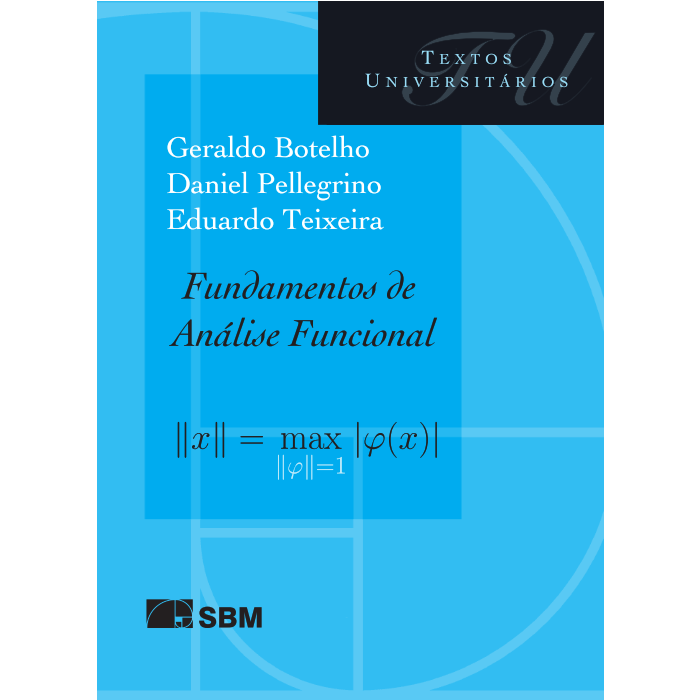
Fundamentos de Análise FuncionalMain
Geraldo Botelho, Daniel Pellegrino e Eduardo Teixeira (SBM)
A high-level Brazilian text, recently published in English by Springer to very positive reception — a testament to its quality. Covers Banach and Hilbert spaces, bounded linear operators, and the major theorems of the field with clarity and rigor, alongside several interesting additional topics. A good choice for self-study readers.
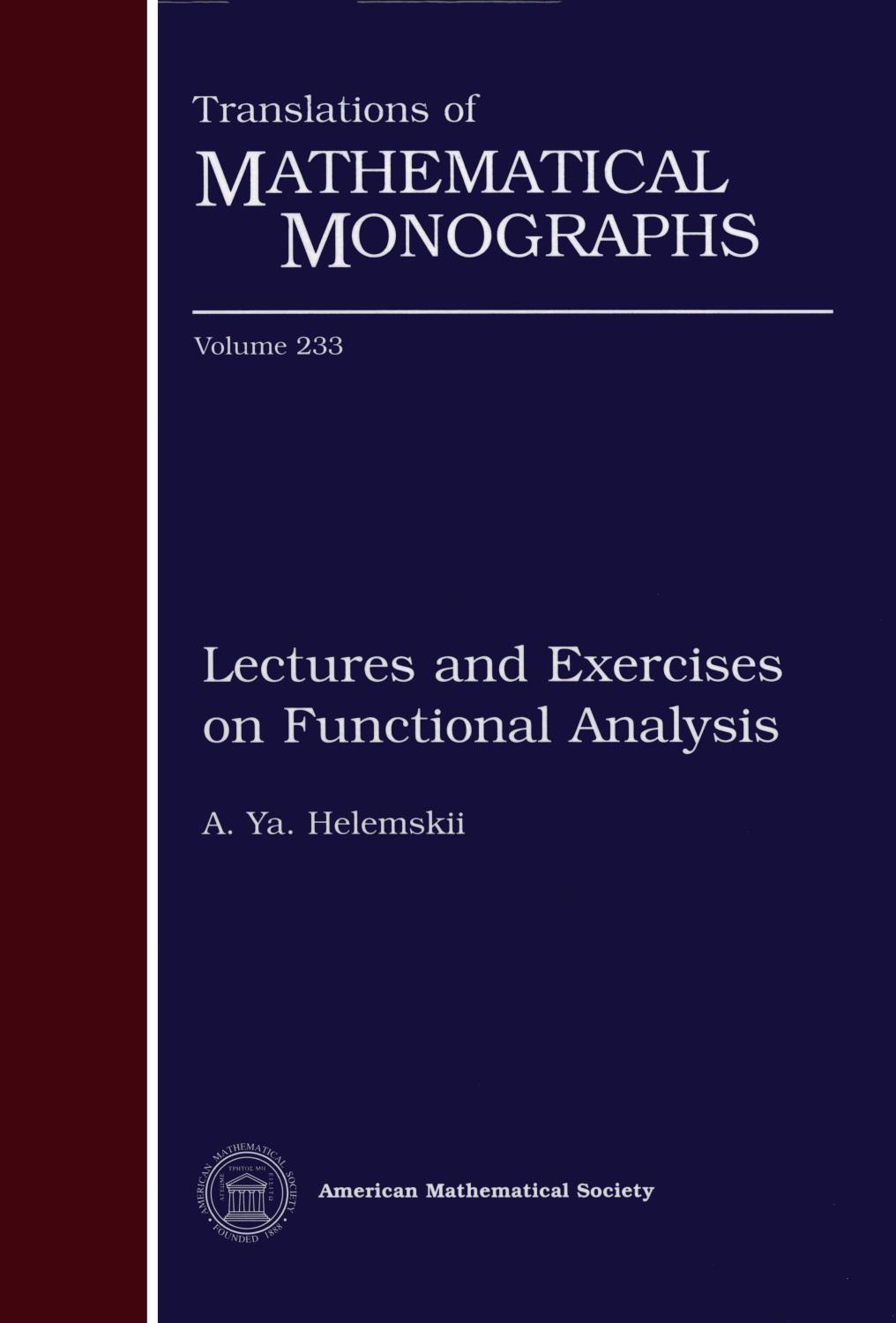
Lectures and Exercises on Functional AnalysisComplementary
Alexander Ya. Helemskii
A very rich, demanding, and highly unusual complement in Functional Analysis. Helemskii makes heavy use of categorical language — something extremely rare in analysis texts — making the book especially valuable for those who also have an interest in categories and abstract structures. The book also covers operator theory, harmonic analysis, and what the author calls quantum functional analysis: a functional-analytic perspective on non-commutative structures and operator spaces that generalize aspects of classical functional analysis. Singular, but not the best first reading for the phase, primarily due to the intense categorical language.
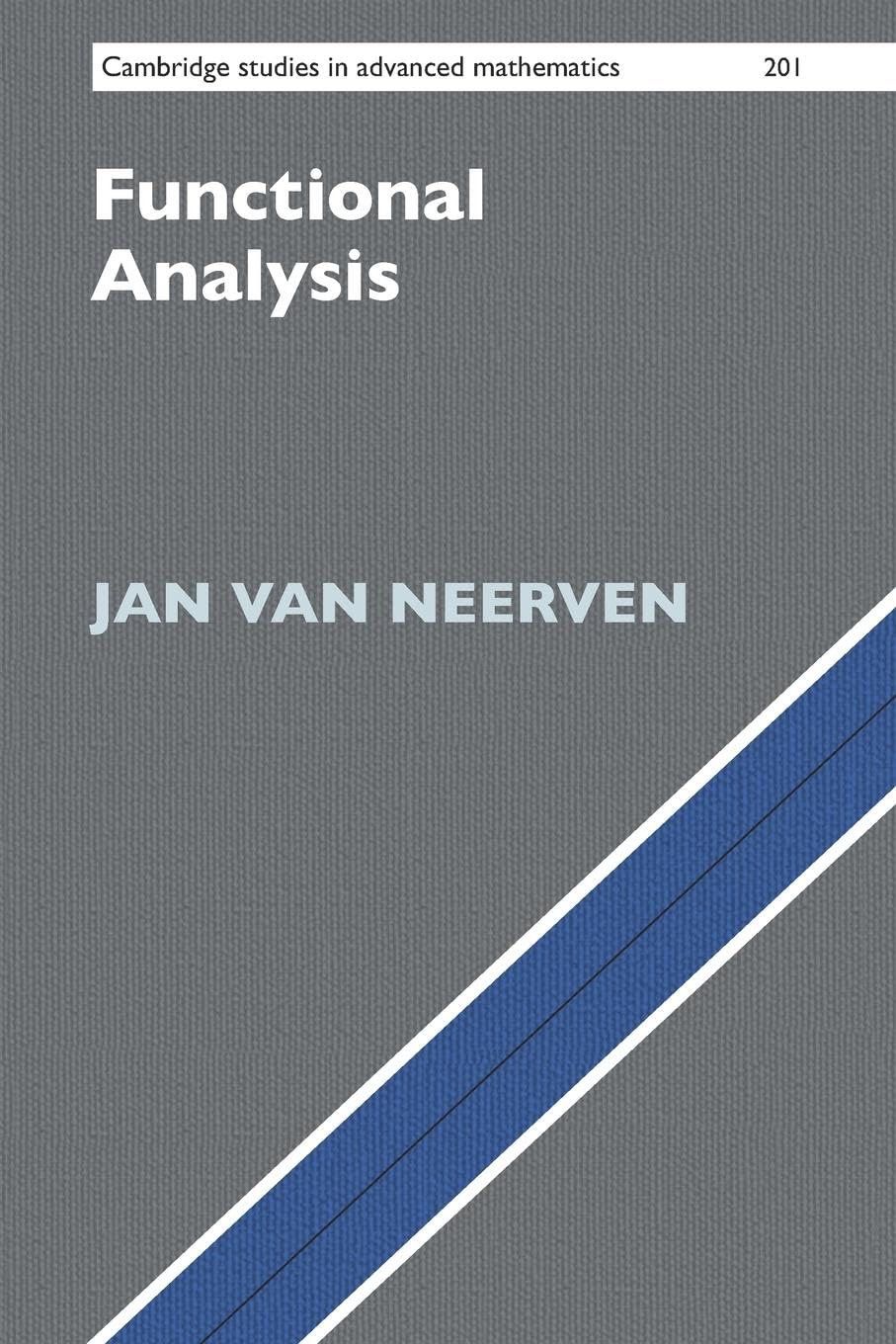
Functional AnalysisComplementary
Jan van Neerven
A modern, traditional, and quite comprehensive reference in Functional Analysis. Van Neerven offers an organized route through Banach and Hilbert spaces, linear operators, duality, functional calculus, semigroups, Sobolev spaces, and function space examples. Closer to the standard analytic tradition than Helemskii, but also encyclopedic and demanding; best used primarily as a selective complement or reference, not as mandatory linear reading.
What to Absorb
- Normed and Banach spaces
- Hilbert spaces: orthogonality, Schauder bases
- Bounded linear operators and the dual space
- Hahn-Banach theorem and its consequences
- Open mapping theorem and closed graph theorem
- Uniform boundedness principle
- Spectrum of linear operators
Minimum to Move On:understanding normed, Banach, and Hilbert spaces; continuous linear operators; basic duality; Hahn-Banach, Banach-Steinhaus, open mapping, and closed graph at an operational level; and fundamental examples such as ℓᵖ, Lᵖ, C(K), and separable Hilbert spaces
Ready to Move On When:
- You can recognize and work with basic examples of Banach and Hilbert spaces
- You understand the role of completeness and why it is decisive in functional analysis
- You can use basic duality and continuous linear functionals in simple examples
- You understand, at least operationally, Hahn-Banach, Banach-Steinhaus, the open mapping theorem, and the closed graph theorem
- You can interpret continuous linear operators as the central objects of the theory
23
Complete
Operator Theory
A natural deepening after Functional Analysis
📚 3 books: 1 main + 1 complementary + 1 reference
Phase 22 (Functional Analysis)
Operator Theory is the in-depth study of linear operators on Hilbert and Banach spaces: C*-algebras, spectrum, compact operators, spectral theory. It is the area where Functional Analysis reaches its most developed form and connects with mathematical physics, representation theory, and K-theory.
How to StudyMurphy is the main text: self-contained, well written, and with the right level of rigor for self-study. Abramovich & Aliprantis and Barry Simon enter as complementary text and reference. Simon in particular is a monumental multi-volume work, not for linear reading, but for deep consultation.
Books
C*-Algebras and Operator TheoryMain
Gerard J. Murphy
The most balanced entry text I know for operator theory and C*-algebras. Self-contained, well written, and pitched at the right level for a first serious reading. Covers C*-algebras, the spectral theorem, and compact operators without sparing rigor.
Introduction to Operator TheoryComplementary
Yuri Abramovich e Charalambos Aliprantis
A complement to Murphy, focusing on operators on Banach spaces and Banach lattices. Expands the perspective well for those who want to go beyond Murphy without completely changing direction.
Operator Theory (4 vols.)Reference
Barry Simon
A monumental and encyclopedic work. Not for linear reading. The permanent reference in the field, with vast coverage of spectral theory, Schrödinger operators, and connections with mathematical physics. Consult according to your research interests.
What to Absorb
- C*-algebras: definition, examples, and morphisms
- Gelfand-Naimark theorem
- Spectral theorem for normal operators
- Compact operators and spectral decomposition
- Fredholm index and Fredholm operators
Minimum to Move On:the topics above via Murphy. Simon and Abramovich & Aliprantis are enrichment and reference
Ready to Move On When:
- You understand the structure of a C*-algebra and can give concrete examples
- You can state and apply the Gelfand-Naimark theorem
- You command the spectral theorem for normal operators on Hilbert spaces
- You understand compact operators and their relationship to finite-dimensional phenomena
24
Complete
Advanced Complex Analysis
A natural deepening after Measure Theory and Functional Analysis
📚 5 books: 1 main + 2 complementary + 2 reference
Phases 12 and 13 (Topology; Complex Variables)
A return to Complex Analysis with accumulated maturity. Deeper results: normal convergence, normal families, the Riemann mapping theorem, infinite products, and the first ideas on Riemann surfaces.
How to StudyConway remains the best entry point: clear, robust, and good for self-study. Remmert enters as a more elegant and conceptual alternative. Ahlfors is the definitive classic of the field, dense and demanding — best as slow reading or mature consultation. Freitag & Busam broadens the horizon with additional topics, including connections with analytic number theory. Berenstein & Gay is for advanced consultation: beautiful, but demanding.
Books
Functions of One Complex Variable IMain
John B. Conway
More accessible than Ahlfors without sacrificing rigor. Covers the classical theory of complex analysis with clarity and a well-calibrated pace for self-study. A good choice for building the foundation before diving into Ahlfors.
Theory of Complex FunctionsComplementary
Reinhold Remmert
An elegant alternative to Conway, with the refinement and formalism characteristic of the German tradition. A beautiful text on complex variables: rigorous, structural, geometrically intuitive, and mathematically mature.
Complex AnalysisComplementary
Freitag e Busam
A European alternative with broad coverage and a good balance between theory and examples. Beyond the classical theory of holomorphic functions, it addresses topics in analytic number theory, which may be of particular interest to those drawn to algebra and number theory.
Complex AnalysisReference
Lars Ahlfors
The classic of Complex Analysis. Dense, elegant, demanding. A second reading through Ahlfors after Conway is very productive: it reveals layers that the first encounter does not reach.
Complex Variables: An IntroductionReference
Carlos A. Berenstein e Roger Gay
Like Ahlfors on steroids: extremely rigorous, modern, and dense — probably the most advanced complex analysis text on this list, and one of the most advanced in the entire roadmap. Connects results of complex analysis with measure theory, functional analysis, algebraic topology, index theory, and related areas. Not for a first reading; presupposes mastery of Conway and Ahlfors. Extraordinarily beautiful, but demanding.
What to Absorb
- Normal convergence and compactness in spaces of analytic functions
- Montel's theorem and normal families
- Riemann mapping theorem
- Weierstrass product for entire functions
- Meromorphic functions and Mittag-Leffler theorem
- Introduction to Riemann surfaces
Minimum to Move On:the topics above via Conway.
Ready to Move On When:
- You work with normal convergence and normal families (Montel's theorem)
- You understand the Riemann mapping theorem
- You know the Weierstrass product for entire functions
25
Complete
Mathematical Quantum Mechanics
A natural application of Functional Analysis
📚 1 book
Phase 22 (Functional Analysis)
Quantum mechanics, formulated mathematically, is essentially operator theory on Hilbert spaces. What was studied in Functional Analysis finds here a deep and unexpectedly motivating application.
Books
Quantum Theory for MathematiciansMain
Brian C. Hall
The best quantum mechanics book written for mathematicians. Rigorous, self-contained, and very well motivated. Presents the theory without sacrificing mathematical precision. Presupposes Functional Analysis and some Differential Geometry.
How to StudyUse Hall as the central reference: it is probably one of the best entry points for mathematicians, introducing quantum mechanics with conceptual care and developing the necessary functional analysis alongside the physical content. Do not try to read all chapters with equal weight. The core of the phase is: the Hilbert space formalism, the Schrödinger equation, self-adjoint operators, the spectral theorem, one-dimensional examples, and basic symmetries. Chapters on WKB, path integrals, geometric quantization, or more physical topics can be read selectively.
What to Absorb
- Formalism of states, observables, and time evolution in Hilbert spaces
- Free Schrödinger equation and first one-dimensional examples
- Symmetric, self-adjoint, and essentially self-adjoint operators in fundamental examples
- Distinction between bounded and unbounded operators
- Spectral theorem for self-adjoint operators at a conceptual and operational level
- Simple Hamiltonians: free particle, potential well, and harmonic oscillator
- Uncertainty principle and canonical commutation relations
- Idea of Stone's theorem and unitary evolution
- Role of symmetries, Lie groups, and representations in basic examples
Minimum to Move On:understanding the Hilbert space formalism, the Schrödinger equation in simple examples, unbounded self-adjoint operators, spectrum, unitary evolution, and the role of canonical commutation relations — without needing to master WKB, path integrals, or geometric quantization
Ready to Move On When:
- You can explain the distinction between state, observable, Hamiltonian, and time evolution
- You understand why observables are modeled by self-adjoint operators
- You can work conceptually with unbounded operators and their domains in simple examples
- You recognize how the spectral theorem justifies the measurement of observables
- You can relate the Schrödinger operator, spectrum, and unitary evolution in basic examples
- You understand the mathematical motivation behind canonical commutation relations and the Stone-von Neumann theorem at an introductory level
26
Complete
Advanced ODE and Dynamical Systems
Flows, stability, linearization, and qualitative dynamics
📚 4 books: 1 main + 3 complementary
Phases 15 and 17 (Differential Equations; Metric Spaces)
This phase deepens the passage from ordinary differential equations to dynamical systems. The focus shifts from solving equations to understanding the qualitative behavior of solutions: flows, vector fields, stability, linearization, phase portraits, autonomous systems, and early bifurcations. The phase presupposes familiarity with basic ODEs and the language of metric spaces — convergence, continuity, completeness, compactness, and fixed points. It does not require Fourier/PDE, probability, or functional analysis as formal prerequisites.
How to StudyUse Teschl as the main text for the phase. The first pass should prioritize existence and uniqueness at a more mature level, flows, autonomous systems, stability, linearization, phase portraits, and early bifurcations. The occasional use of Mathematica in Teschl should be understood as visual or computational support, not as a required part of the study: the mathematical core can be studied with pencil and paper and, if desired, with Python or other software. Sotomayor, Palis & de Melo, and Perko are strong and demanding complements: use them selectively to deepen specific points, not as required cover-to-cover reading.
Books
Ordinary Differential Equations and Dynamical SystemsMain
Gerald Teschl
Main text for the phase. Modern, well organized, and suitable for self-study, connecting ODEs, flows, stability, autonomous systems, and qualitative dynamics. The author occasionally uses Mathematica in examples or illustrations, but this should be understood as computational support, not a requirement: the mathematical core can be studied with pencil and paper and, if desired, with Python or other software.

Lições de Equações Diferenciais OrdináriasComplementary
Jorge Sotomayor
A classic Brazilian reference for ODEs with a serious mathematical treatment. A demanding book, better suited for deepening the theory after a first pass through Teschl. Excellent for reinforcing existence, uniqueness, continuous dependence, stability, and qualitative aspects of solutions.

Introdução aos Sistemas DinâmicosComplementary
Jacob Palis Jr. e Welington de Melo
A fundamental Brazilian text for entering dynamical systems with greater mathematical structure. More demanding and less introductory than Teschl in several respects, so it works better as selective enrichment. Complements the phase by developing the language of dynamics, stability, early recurrence, and qualitative behavior from a more geometric and global perspective.
Differential Equations and Dynamical SystemsComplementary
Lawrence Perko
A strong complement for nonlinear dynamics, planar systems, stability, bifurcations, and qualitative theory. Also a dense book, more appropriate for consultation and selective deepening than for complete linear reading at this phase.
What to Absorb
- Existence and uniqueness theorems in a more mature formulation
- Continuous dependence on initial conditions
- Flows associated with vector fields
- Autonomous systems
- Equilibrium points
- Stability and asymptotic stability
- Linearization
- Phase portraits
- Orbits and invariant sets
- Early bifurcations
Minimum to Move On:understanding flows of ODEs, stability of equilibria, linearization, phase portraits, and the idea of studying the qualitative behavior of solutions without relying on explicit formulas
Ready to Move On When:
- You can interpret an autonomous ODE as a dynamical system
- You understand the concept of a flow associated with a vector field
- You can analyze the stability of equilibrium points in basic examples
- You use linearization to study the local behavior of solutions
- You can draw and interpret simple phase portraits
- You recognize early bifurcations and qualitative changes in dynamical behavior
27
Complete
Advanced PDE
Distributions, weak solutions, Sobolev spaces, energy methods, and variational formulations
📚 4 books: 2 main + 2 complementary
Phases 16 and 22 (Fourier and Elementary PDE; Functional Analysis)
This phase returns to classical partial differential equations in a more modern language. The focus shifts from elementary methods — separation of variables and Fourier series — to distributions, weak derivatives, weak solutions, the Fourier transform in PDE, energy estimates, boundary-value problems, duality, variational formulations, and a first encounter with Sobolev spaces. Vasy organizes the first pass in a more accessible and guided way, while Evans serves as the advanced main text and classic reference for deepening the standard theory of weak solutions, Sobolev spaces, regularity, and elliptic, parabolic, and hyperbolic equations. Measure Theory enters indirectly through the path to Functional Analysis, especially via Lp spaces and function spaces. Operator Theory, Probability, and Advanced ODE are helpful in specific directions but are not formal prerequisites.
How to StudyUse Vasy as the main text to organize the first pass through the phase. The initial goal is to understand distributions, weak derivatives, the Fourier transform in PDE, energy estimates, boundary-value problems, duality, variational formulations, and a first contact with Sobolev spaces. Evans should enter as the advanced main text: use it to deepen the central topics, especially Sobolev spaces, weak solutions, variational methods, regularity, and elliptic, parabolic, and hyperbolic equations. Folland is useful for a more concise and analytic approach; Jost offers a complementary route with connections to geometric analysis and variational methods. Do not try to master the full theory of PDE at once: the goal is to leave the phase understanding the basic modern language of the field and being prepared to consult Evans with maturity.
Books
Partial Differential Equations: An Accessible Route Through Theory and ApplicationsMain
András Vasy
The lighter and more accessible main text for the phase. Vasy offers a modern route to PDE with fewer prerequisites than Evans or Folland, introducing distributions early and guiding the reader through first-order equations, classical linear equations, Fourier methods, boundary conditions, Duhamel's principle, separation of variables, inner product spaces, duality, and variational problems. Use as the main text to build the bridge between elementary PDE and advanced theory.
Partial Differential EquationsMain
Lawrence C. Evans
The advanced main text and central classic reference for the phase. Evans is denser and more demanding than Vasy, but deepens the standard language of the field: Sobolev spaces, weak solutions, variational methods, regularity, and elliptic, parabolic, and hyperbolic equations. Use to consolidate and deepen the topics Vasy introduces, without treating it as required cover-to-cover reading on the first pass.
Introduction to Partial Differential EquationsComplementary
Gerald B. Folland
A concise and analytic complement for PDE. Useful for reviewing and consolidating the foundations with a more direct approach, especially for linear equations, distributions, the Fourier transform, and classical methods. Works well as a second perspective for readers who want a leaner route.
Partial Differential EquationsComplementary
Jürgen Jost
A complement with strong connections to geometric analysis and variational methods. Useful for those who want to see PDE within a broader panorama involving analysis, geometry, and nonlinear problems. Can be used selectively, especially after gaining some familiarity with the basic language of Sobolev spaces, weak solutions, and energy estimates.
What to Absorb
- Classical and weak formulations of PDEs
- Distributions and weak derivatives
- Fourier transform in PDE
- Lp spaces as the foundation for function spaces
- First contact with Sobolev spaces and energy norms
- Energy methods
- Boundary-value problems
- Duality and solvability at an introductory level
- Variational formulations
- Basic elliptic problems
- Basic parabolic problems
- Basic hyperbolic problems
- Initial notions of regularity
Minimum to Move On:understanding the difference between classical and weak solutions, knowing the role of distributions and weak derivatives, recognizing Sobolev spaces at an introductory level, understanding energy methods and variational formulations, and distinguishing elliptic, parabolic, and hyperbolic equations
Ready to Move On When:
- You can explain why weak solutions are necessary in PDE
- You understand distributions and weak derivatives in basic examples
- You recognize how the Fourier transform appears in PDE problems
- You understand the initial role of Sobolev spaces and energy norms
- You recognize how energy methods control solutions
- You can distinguish elliptic, parabolic, and hyperbolic problems
- You understand the function of variational formulations in PDE problems
- You are prepared to consult Evans with greater maturity and to encounter PDE in geometric analysis, mathematical physics, spectral theory, and variational problems
28
Complete
Advanced Algebra
Abstract algebra through a categorical approach
📚 1 book
Phase 18 (Algebra II)
How to StudyUse Aluffi as a second pass through abstract algebra, now at a more structural level. The priority is not to read the entire book, but to understand how categorical language reorganizes familiar objects: groups, rings, modules, homomorphisms, quotients, products, universal properties, and exact sequences. Pay particular attention to modules, tensor products, multilinear algebra, and the first encounters with homological algebra — but without reducing the phase to preparation for Commutative Algebra. The value of the book lies precisely in showing algebra as a network of universal constructions and recurring ideas.
This phase is a return to abstract algebra from a more advanced, unifying, and categorical point of view. After Algebra II, the goal is not simply to accumulate new topics, but to reorganize groups, rings, modules, universal products, tensors, algebras, and homological constructions within a more mature structural language. Aluffi should be used as a broad map of modern algebra: categories appear as an organizing language, not as an isolated appendix. The phase prepares Commutative Algebra and Algebraic Geometry, and also opens doors to representations, homological algebra, category theory, and other algebraic directions.
Books
Algebra: Chapter 0Main
Paolo Aluffi
Main text for the phase. A modern, broad, and categorical treatment of abstract algebra, introducing categories early as a unifying language. Should not be treated as a checklist to complete, but as a second structural reading of algebra: groups, rings, modules, universal properties, tensors, algebras, and homological notions appear within the same conceptual architecture. Very well written and rich in mathematical prose, but encyclopedic; use selectively and with clear objectives.
What to Absorb
- Categorical language as a way of organizing algebra, without losing contact with concrete examples
- Universal properties in basic constructions: products, coproducts, quotients, free objects, and initial/terminal objects
- Groups revisited structurally: homomorphisms, quotients, actions, products, free groups, Sylow, and decompositions
- Rings and modules as natural extensions of linear algebra, including ideals, quotients, free modules, and presentations
- Factorization in domains: UFDs, PIDs, Euclidean domains, polynomials, and arithmetic examples
- Linear algebra in algebraic language: free modules, determinants, canonical forms, and polynomial ring actions
- Fields and extensions: algebraic extensions, finite fields, classical constructions, and a return to Galois theory
- Functors, equivalences, limits, colimits, and adjunctions at an operational level
- Tensor products, change of base, Hom, duality, and multilinear algebra
- First contact with complexes, homology, Tor, Ext, abelian categories, and derived categories at a panoramic level
Minimum to Move On:understanding how categories and universal properties organize recurring algebraic constructions; being able to move between groups, rings, modules, fields, and linear algebra in structural language; and recognizing tensors, Hom, exact sequences, and homological notions as tools that reappear in algebra, topology, and geometry
Ready to Move On When:
- You can explain universal properties in concrete examples: products, quotients, free objects, and tensor products
- You understand categories and functors as an organizing language, not as decorative formalism
- You can recognize the same algebraic structure appearing in groups, rings, modules, vector spaces, and fields
- You work with groups, actions, quotients, rings, ideals, modules, and field extensions without relying purely on isolated recipes
- You understand tensor products, Hom, and duality as universal constructions, at least in basic examples
- You recognize exact sequences, complexes, homology, Tor, and Ext as the entry to homological algebra, without needing to master derived categories
- You see why Aluffi functions as a bridge to commutative algebra, algebraic geometry, algebraic topology, representations, and category theory
29
Complete
Differential Geometry
From classical geometry to connections and curvature
📚 4 books: 2 main + 1 complementary + 1 reference
Phases 11 and 14 (Multivariable Analysis; Geometry of Curves and Surfaces)
This phase deepens differential geometry from a concrete foundation: multivariable analysis, parametrizations, Euclidean submanifolds, curves, and surfaces. The goal is to advance from classical geometric intuition toward the more modern language of fields, forms, connections, and curvature. Kühnel and Prasolov serve as geometric and motivating entry points; Tu enters as a second moment, organizing differential geometry on manifolds through connections, curvature, and characteristic classes.
How to StudyStart with Kühnel as the geometric guide, using Prasolov in parallel for examples, motivation, and worked exercises. The phase can be started after Multivariable Analysis and Geometry of Curves and Surfaces, as that background already provides familiarity with parametrizations, Euclidean submanifolds, and curvature. For the modern part on manifolds, advance to Tu after studying Differentiable Manifolds or in parallel with it. Jeffrey Lee serves as a broad reference for consultation, not as mandatory linear reading.
Books
Differential Geometry: Curves - Surfaces - ManifoldsMain
Wolfgang Kühnel
The most natural geometric entry for this phase. Makes the transition from curves and surfaces to manifolds while maintaining strong visual intuition, many examples, and a less abrupt progression than more abstract texts. A good entry point before advancing to connections, curvature, and characteristic classes in modern language.
Differential Geometry: Connections, Curvature, and Characteristic ClassesMain
Loring W. Tu
Main text for the modern language of differential geometry on manifolds. Develops connections, curvature, and characteristic classes with excellent organization. Need not be the first book in the phase: it works better after some geometric familiarity with Kühnel or Prasolov and, ideally, after or in parallel with Differentiable Manifolds. Also serves as a bridge to Chern-Weil theory, differential topology, and global geometry.
Differential GeometryComplementary
Viktor V. Prasolov
A short, motivating, and quite friendly text for consolidating geometric intuition. Includes examples and worked exercises, making it especially useful for self-study. Works very well as parallel support without replacing the main books of the phase.
Manifolds and Differential GeometryReference
Jeffrey M. Lee
A broad and robust reference for manifolds and differential geometry. More extensive than needed for a first pass, but excellent for consultation, deepening, and connecting the various topics of the phase.
What to Absorb
- Transition from curves and surfaces to manifolds
- Euclidean submanifolds and geometric examples
- Vector fields and differential forms in a geometric context
- Tangent and cotangent bundles in concrete examples
- Connections and covariant derivative
- Curvature of a connection
- First ideas on characteristic classes
- Geometric intuition for fundamental examples
Minimum to Move On:understanding the transition from classical curve-and-surface geometry to manifolds, interpreting fields, forms, connections, and curvature in fundamental examples, and recognizing the geometric role of connections without needing to master characteristic classes in depth
Ready to Move On When:
- You can relate examples of curves and surfaces to the more general language of manifolds
- You understand vector fields, differential forms, and tangent/cotangent bundles in concrete examples
- You can explain the idea of a connection as a way of differentiating fields along directions
- You recognize curvature as a geometric obstruction to the local triviality of a connection
- You understand why Tu enters as a second modern moment, not as the required starting point
30
Complete
Differentiable Manifolds
The modern framework of geometry and mathematical physics
📚 4 books: 1 main + 1 reference + 2 complementary
Phase 12 (Topology); Phase 29 recommended as geometric support
An encounter with abstract manifolds — spaces that locally resemble ℝⁿ but can have complex global topology. The natural setting for theoretical physics, modern geometry, and differential topology. Tu is more accessible for self-study; John M. Lee is the complete reference.
How to StudyUse Tu as the first reading to build the basic language of differentiable manifolds, differential forms, and de Rham cohomology with good progression. Lee works as a broad and modern reference for consultation, especially when more technical detail is needed. Conlon should enter as an advanced complement: more demanding and more focused, it deepens tensor algebra, exterior algebra, and form theory more substantially than Tu, Lee, or Jänich, and advances to integration of forms, Stokes' theorem, singular homology, exact sequences, Mayer-Vietoris, and de Rham cohomology. It also covers flows, foliations, Lie groups, an introduction to Riemannian geometry, and principal bundles. Use after Tu or in parallel with Lee, especially for a more focused and deeper route through differential forms, chain integration, and de Rham theory, without entering the encyclopedic character of Lee. Jänich can be used as a geometric bridge between vector calculus, differential forms, and the abstract language of manifolds.
Books
An Introduction to ManifoldsMain
Loring W. Tu
More accessible and self-contained than Lee, with careful progression and rich examples. The first choice for those learning the subject on their own. Rarely does a technical book combine rigor and clarity so well.
Differentiable ManifoldsComplementary
Lawrence Conlon
An advanced complement for the phase. Probably the deepest text among the books in this block: treats differentiable manifolds rigorously, develops tensor algebra, exterior algebra, and form theory more substantially than Tu, Lee, or Jänich, and advances to integration of forms, Stokes' theorem, singular homology, exact sequences, Mayer-Vietoris, and de Rham cohomology. Also covers flows, foliations, Lie groups, an introduction to Riemannian geometry, and principal bundles. Use after Tu or in parallel with Lee, especially if you want a more focused and deeper route through differential forms, chain integration, and de Rham theory, without the encyclopedic character of Lee.
Vector AnalysisComplementary
Klaus Jänich
Jänich is an excellent bridge between multivariable analysis, differential forms, and abstract manifolds. Geometric, visual, and conceptually clear, it helps connect the classical language of vector calculus with the modern language of forms. A hallmark of the German school: rigorous and carefully structured, without sacrificing geometric intuition. Less widely known than it deserves, especially for the way it connects geometric intuition, vector calculus, and differential forms.
Introduction to Smooth ManifoldsReference
John M. Lee
The modern and complete reference for smooth manifolds. Covers all the machinery: bundles, connections, Riemannian metrics, differential forms, de Rham cohomology, with encyclopedic rigor and depth. Use as a reference while studying Tu.
What to Absorb
- Differentiable manifolds: atlas, charts, smooth structure
- Tangent and cotangent bundles, vector fields, and flows
- Submanifolds and the implicit function theorem on manifolds
- Differential forms and the exterior derivative
- Orientation and integration on manifolds
- Stokes' theorem on manifolds
Minimum to Move On:the topics above via Tu
Ready to Move On When:
- You can construct examples of manifolds with an explicit atlas
- You work with the tangent bundle and differential forms with confidence
- You understand Stokes' theorem as a unifying result on manifolds
31
Complete
Riemannian Geometry
Metrics, geodesics, and curvature
📚 3 books: 1 main + 1 complementary + 1 reference
Phase 30 (Differentiable Manifolds)
This phase studies smooth manifolds equipped with a Riemannian metric. With that structure in place, geometric notions such as length, angle, volume, geodesics, the Levi-Civita connection, and metric curvatures all become meaningful. The preceding Differential Geometry phase and this one are not redundant: the former organizes the general language of fields, forms, bundles, connections, and curvature; this phase studies the special — but central — case in which the manifold carries a metric, enabling measurement, comparison, curvature, and global study of differentiable spaces.
How to StudyUse Lee as the central reference: metrics, the Levi-Civita connection, geodesics, and curvature should become clear through fundamental examples. The preceding Differential Geometry phase is highly recommended, as it builds intuition for connections and curvature, but the essential prerequisite is the language of Differentiable Manifolds. Godinho and Natário can be used as a more accessible and motivating support, especially for seeing geometric and physical applications. Jost enters only as an advanced reference for selective consultation, particularly for those who want to approach geometric analysis.
Books
Riemannian Manifolds: An Introduction to CurvatureMain
John M. Lee
Main text for the phase. Presents Riemannian metrics, the Levi-Civita connection, geodesics, and curvature with clarity, rigor, and good progression. Should be the axis for understanding metric geometry on manifolds.
An Introduction to Riemannian Geometry: With Applications to Mechanics and RelativityComplementary
Leonor Godinho and José Natário
An accessible and very useful complement, with a friendly and example-driven approach. Helps reinforce metrics, geodesics, curvature, and geometric applications, serving as support for those who want a less demanding entry before or alongside Lee. Also presents interesting connections with physics, especially Mechanics and Relativity.
Riemannian Geometry and Geometric AnalysisReference
Jürgen Jost
An advanced reference for selective consultation. More demanding and analytic, covering Riemannian geometry with topics from geometric analysis. Should not be treated as mandatory linear reading at this phase, but as enrichment for those who want to go further.
What to Absorb
- Riemannian metrics
- Levi-Civita connection
- Covariant derivative
- Geodesics and parallel transport
- Sectional curvature
- Ricci curvature and scalar curvature at an introductory level
- Fundamental examples: Euclidean spaces, sphere, torus, and low-dimensional manifolds
- First ideas of global geometry, where appropriate
Minimum to Move On:understanding Riemannian metrics, the Levi-Civita connection, geodesics, parallel transport, and sectional, Ricci, and scalar curvatures in fundamental examples — without needing to master comparison geometry, global theorems, or advanced geometric analysis
Ready to Move On When:
- You can explain how a Riemannian metric allows measuring lengths, angles, and volumes
- You understand the Levi-Civita connection as the connection compatible with the metric and torsion-free
- You can work with geodesics and parallel transport in basic examples
- You recognize the distinctions between sectional, Ricci, and scalar curvature at an introductory level
- You can compute or interpret simple examples such as Euclidean space, the sphere, and the torus
32
Complete
Manifolds, Sheaves, and Cohomology
📚 1 book
Phases 9, 12, and 30 (Algebra I; Topology; Differentiable Manifolds)
NoteThis phase requires good familiarity with differentiable manifolds and algebra, covered by the preceding phases. It is an advanced reading that connects differential geometry with the modern language of sheaves — the same language that appears in algebraic geometry. It is not necessary for most research directions in classical differential geometry or analysis.
How to StudyThis phase is advanced, but the initial goal is not to master the full theory of sheaves or cohomology in maximum generality. Use Wedhorn as a bridge between manifolds, global geometry, and the local-to-global language. Read the motivation carefully: why local data does not always glue globally, how sheaves organize local sections, and why cohomology detects obstructions. Appendices and the more homological parts can be used selectively for consultation.
An introduction to the language of sheaves and cohomology in the context of differentiable manifolds. Wedhorn builds sheaf theory rigorously and applies it to the study of manifolds, preparing the ground for modern algebraic geometry and complex geometry.
Books
Manifolds, Sheaves and CohomologyMain
Torsten Wedhorn
A rigorous introduction to sheaf theory in the context of differentiable manifolds. Covers sheaves, de Rham cohomology, sheaf cohomology, and their relationships. The most accessible text I know for entering this language without sacrificing rigor.
What to Absorb
- Manifolds as global geometric spaces
- Presheaves, sheaves, and concrete examples
- Local sections, global sections, and the gluing condition
- Morphisms of sheaves and short exact sequences
- Sheaves of functions, differential forms, constant sheaves, and geometric examples
- The idea of cohomology as a measure of global obstructions
- First contact with Cech cohomology or sheaf cohomology, without requiring complete technical mastery
Minimum to Move On:understanding what a sheaf is, how local sections glue together, why cohomology measures global information not visible locally, and how this language prepares for algebraic geometry and algebraic topology
Ready to Move On When:
- You can explain the difference between local and global data
- You understand the gluing condition for compatible local sections
- You can give simple examples of function sheaves, differential form sheaves, and the constant sheaf
- You recognize short exact sequences of sheaves at a conceptual level
- You understand why cohomology appears as the natural language for global obstructions
33
Complete
Algebraic Topology and Category Theory
Algebra, topology, and a unifying language
📚 4 books: 2 main + 2 alternative
Phases 9 and 12 (Algebra I; Topology)
Algebraic Topology uses algebraic tools to distinguish topological spaces. The fundamental group and homology count holes in different dimensions. Category Theory enters here as a unifying language — not before, when it becomes empty formalism without enough examples to give it meaning.
How to StudyFor Algebraic Topology, use Rotman as the main reference: demanding, but with careful progression and a structure well suited to self-study. Hatcher is a free, geometric, and highly influential alternative, but its style divides opinions: for some readers, the approach is deeply illuminating; for others, it can feel non-linear for studying alone. For Category Theory, Riehl is one of the best modern references; Awodey is a more accessible alternative for a first pass.
Algebraic Topology
An Introduction to Algebraic TopologyMain
Joseph Rotman
Demanding, but solid. The progression is careful, the rigor is complete, and the structure favors self-study readers. One of the best books for entering algebraic topology seriously.
Algebraic TopologyAlternativeFree ↗
Allen Hatcher
Freely available on the author's website. A classic, geometric, and highly influential reference. Its style divides opinions: it can be excellent for those who enjoy strong geometric intuition, but less predictable for linear self-study. Worth exploring and deciding for yourself.
Category Theory
Category Theory in ContextMainFree ↗
Emily Riehl
One of the best modern references for studying categories with genuine mathematical context. Rich examples from Algebra and Topology, adjunctions and the Yoneda lemma treated with elegance. Freely available on the author's website.
Category TheoryAlternative
Steve Awodey
A clear and well-motivated introduction to category theory. Less dense than Riehl, with more room for examples and intuition before formality. Covers categories, functors, natural transformations, and adjunctions at a good pace for those coming to the subject fresh.
What to Absorb
- Fundamental group π₁ and computation in simple spaces
- Covering space theory and path lifting
- Singular homology: definition and computation
- Long exact sequence of a pair
- Categories, functors, and natural transformations
- Adjunctions and the Yoneda lemma
Minimum to Move On:the topics above; one algebraic topology book and one category theory book are sufficient
Ready to Move On When:
- You can compute fundamental groups of simple spaces and interpret basic covering spaces
- You understand the idea of homology as a computable topological invariant
- You can use long exact sequences in simple examples
- You understand categories, functors, and natural transformations as a structural language
- You recognize adjunctions and the Yoneda lemma in basic examples, without needing to master advanced category theory
34
Complete
Commutative Algebra
A prerequisite for Algebraic Geometry
📚 2 books: 1 main + 1 complementary
Phases 18 and 28 (Algebra II; Advanced Algebra)
Commutative Algebra is the algebraic language of Algebraic Geometry. Noetherian rings, modules, localization, completion, and Krull dimension appear throughout modern algebraic geometry. This phase is short in number of books but dense in ideas: it should not be rushed.
How to StudyAtiyah-MacDonald is an absolute classic: short, dense, with exercises that are an essential part of the text. It can be rough on a first reading, but it is the canonical book in the field and there is no substitute. Reid is gentler and works well as preparatory or parallel reading to soften the harder passages of AM.
Books
Introduction to Commutative AlgebraMain
M. F. Atiyah e I. G. MacDonald
An absolute classic. Short, dense, and with exercises that are an essential part of the text. It can be rough, but it is the canonical book on commutative algebra. Those who master AM are well prepared for any text in modern algebraic geometry.
Undergraduate Commutative AlgebraComplementary
Miles Reid
More accessible than Atiyah-MacDonald, with more motivation and geometric context. A useful parallel reading for those who want to understand why the concepts are necessary before diving into the density of AM.
What to Absorb
- Noetherian and Artinian rings
- Modules: localization and completion
- Primary ideals and primary decomposition
- Krull dimension
- Nakayama's lemma
- Hilbert's Nullstellensatz
Minimum to Move On:the topics above via AM or Reid
Ready to Move On When:
- You work with localization and modules with confidence
- You understand primary decomposition and Krull dimension
- You can state and apply the Nullstellensatz
35
Complete
Algebraic Geometry I
Algebra and geometry in their most profound form
📚 2 books: 1 main + 1 complementary
Phase 34 (Commutative Algebra)
Algebraic Geometry studies the zero sets of systems of polynomial equations, connecting commutative algebra, topology, and geometry in a deep way. This phase covers an accessible introduction before the advanced reference of the following phase.
How to StudyUse this phase as a geometric entry into commutative algebra. The goal is to learn to translate between polynomial equations and algebraic objects: ideals, coordinate rings, morphisms, and the Zariski topology. Do not try to anticipate the full language of schemes here. Work through many simple affine and projective examples before advancing to the next phase.
Books
Algebraic Geometry: A First CourseMain
Emily Clader e Jonathan Ross
A modern and concise introduction to algebraic geometry. Presents affine and projective varieties, morphisms, and the first examples of schemes in an accessible way, without presupposing the full machinery of advanced commutative algebra. A good entry point before Bosch or Vakil.
Algebraic Geometry and Commutative AlgebraComplementary
Siegfried Bosch
Covers commutative algebra and algebraic geometry in an integrated way. Good progression for those coming from a solid algebra background.
What to Absorb
- Affine and projective algebraic varieties at an introductory level
- Ideals, coordinate rings, and the algebra-geometry correspondence
- Zariski topology
- Regular morphisms and rational maps in simple examples
- Initial notions of projective varieties
- First contact with sheaves or schemes, only if the chosen text reaches that far
Minimum to Move On:understanding the correspondence between ideals and algebraic sets, coordinate rings, the Zariski topology, and basic examples of affine and projective varieties
Ready to Move On When:
- You can move from a set defined by polynomials to its ideal and coordinate ring
- You understand the Zariski topology in simple affine and projective examples
- You can interpret regular morphisms and rational maps in basic examples
- You recognize why commutative algebra is the natural language of algebraic geometry
- You are prepared to see schemes as a systematic extension of algebraic varieties
36
Complete
Algebraic Geometry II
Final phase · Expert territory
📚 1 book
Phases 32 and 35 (Manifolds, Sheaves, and Cohomology; Algebraic Geometry I)
NoteThis is the most advanced and specialized area of the entire roadmap. Vakil's book is renowned for its depth and demands. It is not a linear text one finishes, but one that is lived with for years. It should only be approached after the previous phase is well consolidated and, ideally, with guidance from a researcher in the area. It is here as a horizon, not as a required destination.
Algebraic Geometry at the level of Grothendieck's schemes: the modern language that unifies geometry, algebra, and arithmetic into a single theory.
How to StudyThis phase should be treated as a long-term horizon. Vakil is excellent, but should not be read as a short-term linear obligation. The goal is to understand why schemes extend classical algebraic geometry: spectra of rings, structure sheaves, morphisms, gluing, and local properties. Advance slowly, working through small examples, and use the text as a research map rather than a task list.
Books
The Rising Sea: Foundations of Algebraic GeometryAdvancedFree ↗
Ravi Vakil
One of the most ambitious texts in contemporary mathematics. Covers scheme theory from scratch with rigor and an abundance of examples. Freely available on the author's website (math.stanford.edu/~vakil). This is not a book one finishes: it is a book one lives with for years.
What to Absorb
- Affine schemes and the spectrum of a ring
- Zariski topology on Spec(A)
- Structure sheaves and locally ringed spaces
- Morphisms of schemes
- Gluing of schemes
- Local and global properties in fundamental examples
- First ideas on sheaf cohomology, if sufficient maturity is present
Minimum to Move On:understanding affine schemes, structure sheaves, morphisms, and gluing of schemes in basic examples; Vakil should be treated as a long-term horizon, not as mandatory linear reading
How to Use the Complete Track
- The Complete Track does not need to be completed in full to have value. It is best understood as a map for deepening, not as an obligatory checklist to be finished.
- Those following analysis can prioritize Measure Theory, Probability, Functional Analysis, Operators, Fourier, and PDE. Those following geometry can prioritize Manifolds, Riemannian Geometry, Sheaves, Algebraic Topology, and future Complex Geometry. Those following algebra can prioritize Advanced Algebra, Commutative Algebra, and Algebraic Geometry.
- Completing the entire Complete Track would be a project of many years and is not the expected goal for most readers. The real aim is to use the curation to choose good paths, good books, and good references according to your chosen mathematical direction.
- If you have reached the point of moving with autonomy through some of these phases, consulting advanced texts, and choosing your own direction, the Complete Track has already served its purpose.
↑ Back to phase map
 PT
PT